


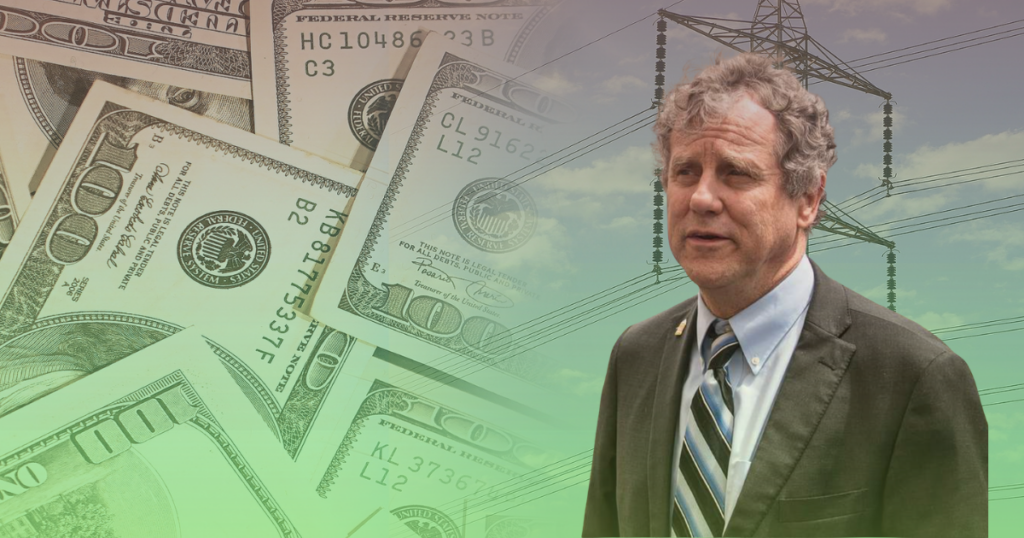
This November, Ohio voters face a stark, clear choice about the future of their energy prices. A look at the Senate voting records of current Senator Jon Husted and former Senator Sherrod Brown reveals two completely different visions for America’s energy security.
During his decades in the Senate, Sherrod Brown earned a dismal 2% lifetime score on the American Energy Scorecard. This contrasts sharply with Senator Jon Husted’s perfect 100% record of defending affordable, reliable energy.
The numbers speak for themselves: Sherrod Brown had 48 distinct opportunities to vote to lower energy prices for Ohio families; 47 of those times he deliberately voted to make energy more expensive, scarcer, and less reliable.
His voting record is a highlight reel of anti-consumer, anti-energy policies, including:
- Voting against approval of the Keystone XL Pipeline in 2015
- Voting against protecting American families from carbon taxes in 2015
- Voting in favor of further restricting energy exploration in Alaska
- Did not vote against AOC’s Green New Deal in 2019
- Voting against allowing additional offshore energy exploration
- Voting against approval of the Keystone XL pipeline in 2021
- Voting in favor of Joe Biden’s disastrous Inflation Reduction Act
- Voting against protecting American families from carbon taxes in 2021
- Voting against making consumer furnaces more affordable in 2024
When we look closer at the cornerstone issues of his tenure, the damage to Ohio families and the broader American economy becomes undeniable.
Keystone XL Pipeline
After more than six years of bureaucratic study and delay under the Obama administration, the Senate finally had the opportunity to pass the Keystone XL Pipeline Act. Allowing this pipeline to cross the U.S.-Canadian border was unequivocally in the national interest, yet Sherrod Brown voted against it.
The Keystone XL pipeline was slated to create thousands of construction jobs. The influx of additional oil meant new manufacturing jobs right here in the United States and far more stable global oil prices. Ultimately, it would have supported a stronger economy and greater energy security for North America. Beyond the direct economic benefits, transporting oil by pipeline remains the safest, most efficient, and most environmentally friendly method available. Had it been built, Ohioans would have already been feeling the benefits of lower energy prices. In short, the pipeline could have delivered tremendous benefits, but Sherrod Brown still chose to stand in its way.
Carbon Taxes
On multiple occasions, the Senate has considered measures to protect citizens from energy taxes, such as in a 2015 amendment that raised a point of order against any legislative proposal to tax carbon dioxide. This amendment was designed to make it harder for Congress to impose a costly, harmful carbon tax on Americans. Brown voted against protecting families from this burden.
A carbon tax has a disastrous economic impact on American families. According to the Heritage Foundation, a $25-per-ton tax that rises just 5% each year would reduce a family of four’s income by $1,900 annually and raise their household energy costs by $500 per year—and that doesn’t even factor in the pain at the pump. It would hike gasoline prices by up to 50 cents per gallon, instantly wiping out the economic gains offered by affordable fuel.
Taxing carbon dioxide destroys jobs and suppresses economic growth. The National Association of Manufacturers found that a carbon tax could cost workers income equivalent to 21 million jobs by 2053, with manufacturing production declining by as much as 15% in energy-intensive sectors.
Make no mistake: taxing carbon dioxide amounts to a tax on modern life. Nearly everything we do depends on energy sources that emit carbon dioxide. Furthermore, a carbon tax has a disproportionately cruel impact on low-income families, who are forced to spend a much higher share of their household income on basic energy costs. By leaving the door open to these taxes, Sherrod Brown proves he has learned nothing from those mistakes.
Domestic Energy Production
During his time in the Senate, Sherrod Brown had multiple opportunities to reform America’s burdensome regulatory environment and make it easier to produce energy—not just in Ohio, but across the entire country. Instead, he chose restriction. By consistently voting to make domestic energy more difficult to extract and produce, Sherrod Brown played a direct, undeniable role in making basic necessities like gasoline, diesel fuel, natural gas, heating oil, and electricity drastically more expensive for decades.
The Green New Deal
When the Senate was forced to reckon with the Green New Deal in 2019, Sherrod Brown could not bring himself to vote against it. This was a radical resolution that openly called for the banning of beef cattle, the grounding of airplanes, the elimination of gasoline-powered vehicles, and the complete, unworkable decarbonization of America’s electric grid. If Brown won’t vote to protect Ohioans from one of the most destructive, expensive legislative proposals ever put before the Senate, he clearly can’t be trusted to put the needs of working families first.
Inflation Reduction Act
Adding to his long history of anti-energy votes, Brown enthusiastically supported H.R. 5376, the 2022 budget reconciliation package better known as the poorly named Inflation Reduction Act.
The American Energy Alliance strongly urged all members to oppose this legislation. The package was stuffed with new taxes and reckless spending—bad policy on a good day, but incredibly dangerous amid historic inflation and an economy teetering toward recession. Multiple independent analyses confirmed that this legislation did nothing to reduce inflation, completely undermining the title its proponents adopted. More government spending, heavy-handed green subsidies, and job-killing taxes are the absolute last things a shaky economy needs.
Ohio families deserve abundant, affordable, and reliable energy. When voters head to the ballot box this November, they must remember exactly who fought for their wallets and who spent a decades-long career voting to empty them.