


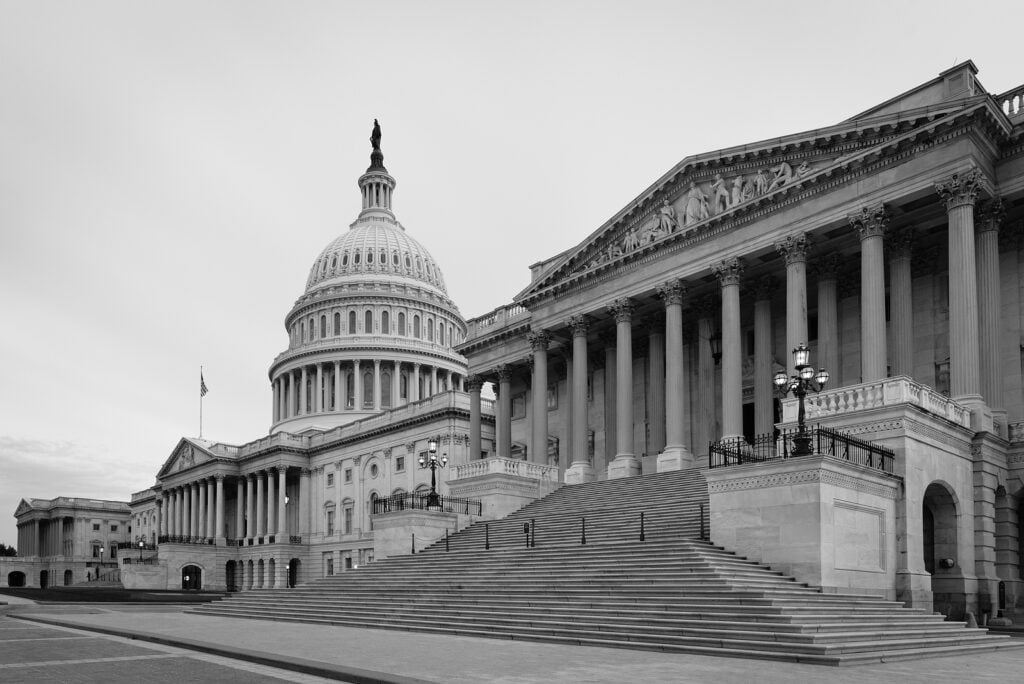
On Friday, April 3rd, a coalition of twenty organizations dedicated to promoting property rights, free markets, and responsible environmental stewardship, including the Pacific Legal Foundation and the American Energy Alliance, sent a letter to Speaker of the House Mike Johnson and House Majority Leader Steve Scalise. The coalition urged them to pass H.R. 1897, the ESA Amendments Act of 2025. After more than 50 years of failure, it is time to modernize the Endangered Species Act (ESA) to prioritize actual results over bureaucratic red tape. The full letter and list of signatories is available here.
The Honorable Mike Johnson
Speaker of the House
U.S. House of Representatives
Washington, DC 20515
The Honorable Steve Scalise
Majority Leader
U.S. House of Representatives
Washington, DC 20515
Dear Speaker Johnson and Majority Leader Scalise,
We, the undersigned organizations, write to urge prompt consideration and passage of H.R. 1897, the ESA Amendments Act of 2025. As organizations committed to property rights, free markets, and responsible environmental stewardship, we believe this legislation would strengthen the Endangered
Species Act (ESA) so that it more effectively ensures species conservation while protecting the rights of landowners.
When Congress enacted the ESA in 1973, the law was intended to identify endangered and threatened species and implement measures to recover them. However, in the more than 50 years since its enactment, the ESA has often failed to achieve its intended purpose. Approximately 1,700 species have been listed under the law, yet the successful recovery rate remains just three percent.
To address shortcomings in the current framework, Chairman Bruce Westerman introduced the ESA Amendments Act of 2025, which contains numerous reforms designed to improve the effectiveness of the law and promote responsible conservation while supporting species recovery. On December 17, the legislation was reported out of the House Natural Resources Committee on a bipartisan basis.
The bill includes several important reforms. First, it provides clear guardrails around the definition of “best scientific and commercial data available” to ensure that data used in ESA decision-making is impartial and applied objectively—without reliance on precautionary assumptions that can skew scientific analysis. Second, the legislation requires agencies to consider both conservation outcomes and economic impacts when issuing regulations governing the take of threatened species, codifying the recent federal district court decision in Kansas Natural Resources Coalition v. U.S. Fish and Wildlife Service. Third, the bill places reasonable limits on attorney’s fees associated with ESA litigation. For too long, certain advocacy organizations have funneled millions of taxpayer dollars into their operations through fee recoveries. The ESA Amendments Act would establish common-sense caps on the amount of attorney’s fees generated from a single lawsuit and limit the total fees that a single organization may receive each year.
Taken together, these and other reforms in the legislation would strengthen the ESA, promote species recovery, and better protect the rights of landowners.
As Congress continues to consider comprehensive permitting reform, modernizing the Endangered Species Act will be an important step toward a more effective and predictable regulatory framework. We therefore urge the House to act quickly to consider and pass this long-overdue legislation.
Sincerely,
The American Energy Alliance & Coalition Partners