


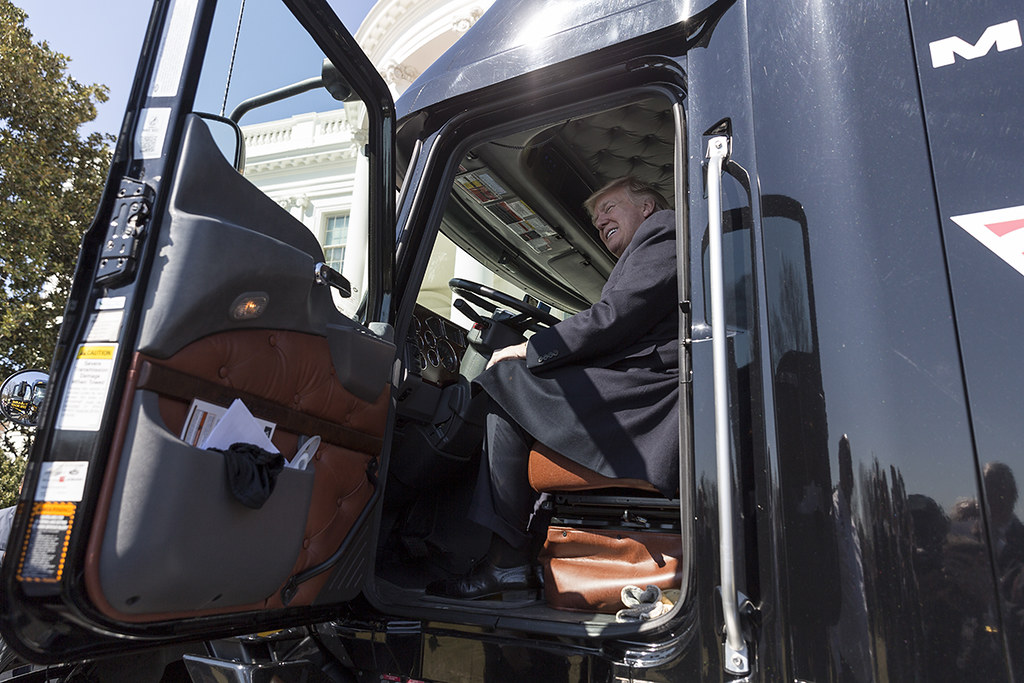
The Trump administration is proposing changes to Biden-era environmental rules regarding heavy-duty vehicles, including buses and large trucks. Trump’s Environmental Protection Agency (EPA) is scaling back and postponing two provisions regarding emissions-reducing technology: one related to warranties and another related to the useful life of emissions technology. The Biden EPA had extended the useful life of emissions technology from 435,000 miles or 10 years to 650,000 miles or 11 years, with a warranty period from 100,000 miles or 5 years to 450,000 miles or 10 years. The change would cut the warranty period for emissions-control components from 10 years to 5 years and delay the current useful-life rules from 2027 to 2030.
EPA will also remove the requirement that truck engines automatically operate at reduced power, down to 5 miles per hour, if their emissions-reduction systems are not working, which is disruptive to truckers and other heavy-duty vehicle operators. Under the Biden rule, if a failure in the diesel exhaust fluid (DEF) system is detected, whether it is an actual failure or a sensor problem, the equipment would lurch to a speed of 5 miles per hour. The EPA proposes to replace that requirement with an alert to drivers via visual and audible warnings, allowing them to reach a repair shop while retaining the truck’s normal power. With more than 200 possible failure codes, the deratements could leave truckers stranded on the side of the road, farmers losing hours or days of productivity during critical work like harvesting, and even create safety issues. The new system attempts to more rationally address emissions reductions and balance them with safety and other considerations.
The EPA estimated that the combined changes could save the trucking industry up to $12 billion, including as much as $6,000 off the sticker price of a new vehicle. The proposal provides some near-term cost relief for manufacturers and buyers. It would also reduce supply chain costs, making goods more affordable for Americans.
The proposal is now open for public comment. EPA plans to hold a virtual public hearing on Zoom for the proposed rule, scheduled for Wednesday, July 29th through Thursday, July 30th. An additional session may be held on Friday, July 31st, if necessary to accommodate the number of commenters who register by July 22, 2026.
According to the American Trucking Association, the Biden policies would require “a premature rollout of commercial motor vehicles with unproven engine technologies onto our highways.” The group requested that the EPA allow truck manufacturers to pay penalties instead of complying with the rules, as long as the industry was working to develop compliant engines, a provision the EPA included in the proposal. Allowing that option avoids supply disruptions during the transition to newer vehicles with more environmental controls. Heavy-duty trucks make up only about 5% of vehicles on the road.
This proposal regarding heavy-duty trucks follows a May proposal delaying emissions standards for model year 2027 light- and medium-duty vehicles. In April 2023, the Biden EPA proposed — and in 2024 finalized — what it called “multi-pollutant emission standards” for model year 2027 and later light-duty and medium-duty vehicles. The rules were designed to be so stringent that the only practical path to compliance was mass electrification of the vehicle fleet. Biden’s Energy Secretary even suggested that the United States could transition to an all-electric military fleet by 2030. The Biden EPA projections assumed that electric vehicles would account for between 56% and 67% of new car sales by 2030-2032. That projection is not materializing. As of 2025, electric vehicles accounted for less than 10% of new U.S. vehicle sales — well short of the trajectory the agency assumed when setting these standards.
Conclusion
Trump’s EPA is scaling back or postponing Biden-era rules regarding heavy-duty trucks, including buses, large trucks and farm equipment. The change would cut the warranty period for emissions-control components from 10 years to 5 and delay the Biden-era useful-life rules from 2027 to 2030. The Trump EPA also proposes replacing the deratement requirement with an alert to drivers, giving them time to make repairs while retaining the truck’s normal operating power, thereby allowing truckers and farmers to remain productive. EPA is also granting the American Truckers Associations’ recommendation to allow non-conformance penalties to give heavy-duty manufacturers additional time to conduct real-world testing on their new emission control systems. According to the EPA, the changes would save the trucking industry between $4,130 and $6,152 per affected diesel engine, thereby helping keep goods more affordable for Americans.
*This article was adapted from content originally published by the Institute for Energy Research.