


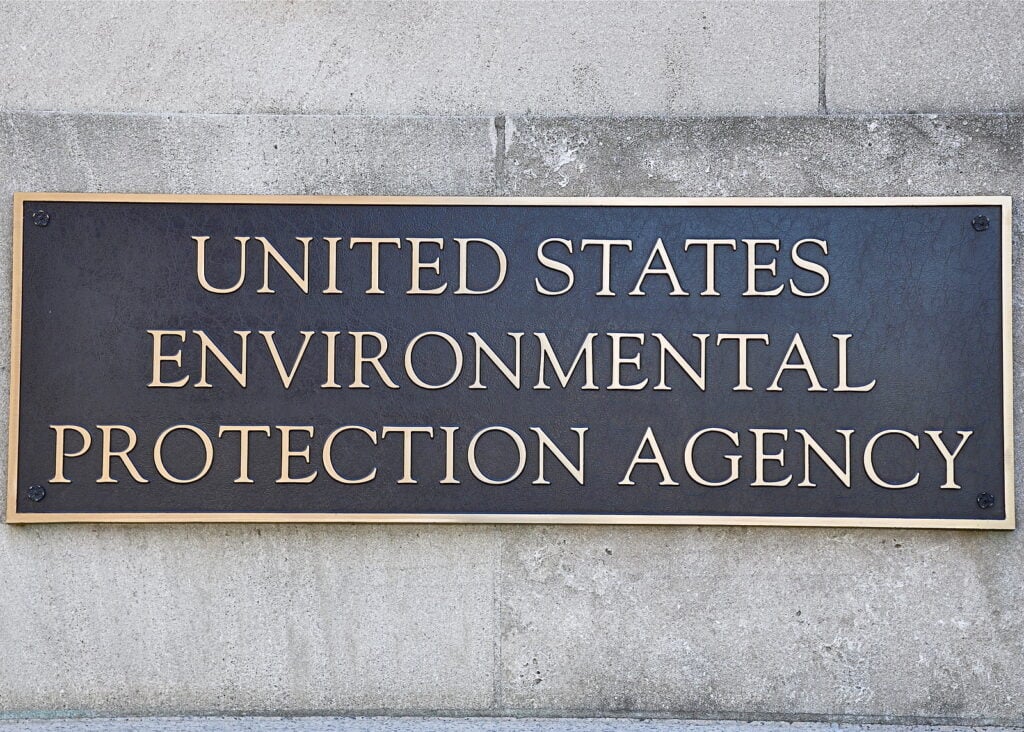
WASHINGTON DC (12/3/25) – In a victory for conservation, the rule of law, property rights, and rural communities, the Trump administration recently proposed two long-overdue rules that restore balance to federal environmental policy while pursuing genuine conservation.
The Environmental Protection Agency unveiled a new rule that aligns the definition of “waters of the United States” (WOTUS) under the Clean Water Act with the U.S. Supreme Court’s unanimous 2023 Sackett v. EPA decision. Simultaneously, the Department of the Interior announced common-sense updates to Endangered Species Act (ESA) regulations that focus on species recovery rather than divisive litigation and illegal federal land management.
Tom Pyle, President of the American Energy Alliance, issued the following statement:
“The Trump administration’s WOTUS reform finally reins in decades of federal overreach and respects the Supreme Court’s Sackett decision. At the same time, the proposed Endangered Species Act updates will end the abuse of a 50-year-old law that has been wielded as a sledgehammer against landowners and has not provided sufficient incentives to recover endangered species. These are pro-environment, pro-economy, pro-America reforms that prove we can conserve our natural heritage and unleash American innovation at the same time. This is exactly the balanced, reasonable regulation the American people voted for.”
Waters of the United States
The WOTUS rule will focus federal regulation within the bounds set by the Constitution, empower states and local communities, and ensure that federal resources are focused on protecting America’s navigable waters.
The proposed rule, announced by Environmental Protection Agency (EPA) Administrator Lee Zeldin and Assistant Secretary of the Army for Civil Works Adam Telle, will end the regulatory ping-pong between administrations and instead establish a rule that builds lasting credibility. Over the years, federal regulators have used the Clean Water Act to regulate wetlands, regardless of the restrictions the Constitution places on the federal government’s power. By focusing on the proper limits of the federal government, this new rule protects landowners from overzealous federal regulators and allows the state to exercise its regulatory prerogatives under the Constitution.
Endangered Species
The Endangered Species Act, like the Clean Water Act, has been improperly used as a tool of federal land use management for too long. Instead of properly focusing on protecting species, federal regulators have frequently wielded the ESA to punish landowners. This suite of regulatory changes focuses the listing process on the best scientific and commercial data, improves the consultation between federal agencies, requires species-specific rules for threatened (as opposed to endangered species), and clarifies how economic and national security impacts are taken into consideration in the designation of critical habitat.
Overall, these rules will create better incentives for federal regulators to partner with landowners to recover endangered and threatened species.
AEA Experts Available For Interview On This Topic:
- Tom J. Pyle, President
- Kenny Stein, Vice President of Policy
- Alex Stevens, Manager of Policy and Communications
Additional Background Resources From AEA:
- American Energy Blueprint
- EPA Announces One of the Largest Regulatory Reform Efforts in History
- IER Submits Three Petitions to Trump Administration to Advance American Energy Goals
For media inquiries please contact:
THOMAS.PYLE@ENERGYDC.ORG