Opinion: Gas, Coal, Oil Fuel Our Everyday Lives

American Energy Alliance President Thomas Pyle published an opinion piece in the Miami Herald today. As divestment activists prepare to descend on Miami, Mr. Pyle shows how divesting from fossil fuels amounts to divesting from the energy and products of modern life. The text of the piece is below:

Miami Herald

Gas, coal, oil fuel our everyday lives
By Thomas Pyle
2/11/2015

Imagine a group of activists that spends its time opposing companies that produce soap, surgical steel and sterile plastics used in hospitals — because it is the “moral” thing to do. It sounds crazy, but it’s already happening.

The same groups pushing to eliminate these life-saving technologies and many other everyday products will soon descend on Miami. The leaders of this movement are holding a two-day event to convince Floridians to “divest” any stocks or bonds from the companies that help make these essential items.

In reality, these activists want Floridians to “divest” from modern life.

Everyone knows that when they flip on a light switch or fuel up their cars, they are using energy. But you might not realize that many of the products we use every day also come from energy — particularly natural gas, oil and coal.

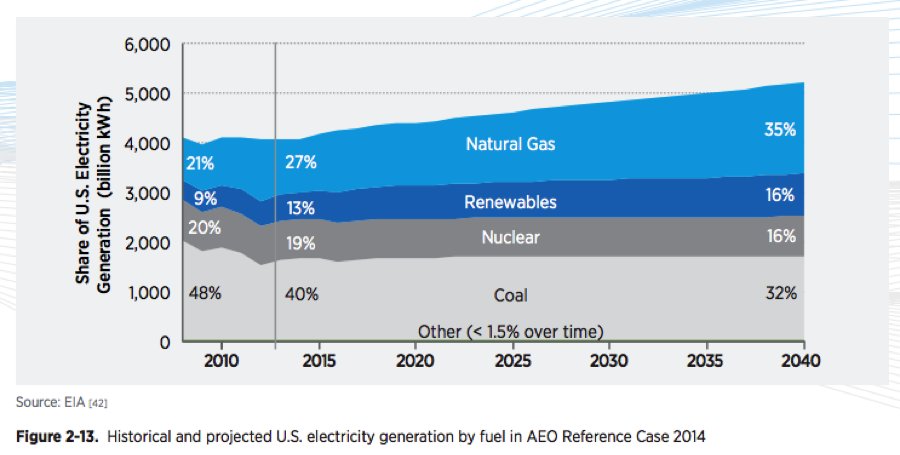
Besides generating 27 percent of America’s electricity, natural gas is used to make fertilizer, pharmaceuticals, plastics and fabrics, just to name a few. If you’re wearing a shirt made from nylon or polyester, you’re wearing a product that came from natural gas.

The same applies to oil and coal. Besides supplying 95 percent of the nation’s transportation fuel, oil is used to make asphalt, aluminum, shampoo, cosmetics and much more. Every step of your morning, from putting on deodorant to driving to work, involves products derived from oil.

Coal, meanwhile, supplies the largest share of the United States electricity, at almost 40 percent. Coal is also used to make steel, concrete, aspirins, soaps, carbon fiber, and more. Imagine life without roads, bridges, and sidewalks. That is life without coal.

Divesting from natural gas, oil, and coal is akin to divesting from modern civilization. But that’s exactly what the so-called fossil fuel divestment movement wants Floridians to do.

The divestment activists who are coming to Miami don’t just want to take away Floridians’ energy, but also the soap, steel, and plastics, which make modern life possible. Floridians should tell these activists to take a hike.

THOMAS PYLE, PRESIDENT, AMERICAN ENERGY ALLIANCE, WASHINGTON, D.C.

Divestment Hypocrisy Explained in One Picture

The graphic below exemplifies the hypocrisy of radical anti-energy activists, who pressure you to give up everything from the deodorant you put on in the morning to the car you drive to work—even as they use fossil fuels in their daily lives. Given that this activist is literally covered with products made from fossil fuels, perhaps we should be celebrating “Hydrocarbon Appreciation Day” instead.

div-protest-infographic-IER-blue

Click the photo below to follow the rest of our efforts on our Divestment Truth page. If you’re ready to take action and stand up against the morally bankrupt divestment movement, click here to join us in our fight for affordable, reliable energy!

div-button-revised

Op-Ed: The Divestment Delusion

With “Global Divestment Day,” aka Global Poverty Day, right around the corner, we thought we’d re-post this informative piece from Travis Fisher, an economist at the Institute for Energy Research. The piece, “The Divestment Delusion,” originally appeared in National Review. Enjoy. 

nat-rev-2

The Divestment Delusion

Fossil-fuel divestment is not “moral”; it’s mad.

By Travis Fisher

For a moment during his climate speech on June 25, President Obama joined the fossil-fuel-divestment movement when he said, “Invest. Divest. . . . Make yourself heard.” The leading group of divestment activists, 350.orgsaid, “Obama’s shout-out to the fossil fuel divestment movement is a huge endorsement.” But what did Obama endorse, exactly?

The goal of the fossil-fuel-divestment movement is for “institutional leaders to immediately freeze any new investment in fossil fuel companies, and divest from direct ownership and any commingled funds that include fossil fuel public equities and corporate bonds within 5 years.”

Divestment activists claim their movement rests on the same moral foundation as the movement to divest from South Africa during apartheid. The website gofossilfree.org, a spin-off of 350.orgtells the success story of the latter movement:

By the mid-1980s, 155 campuses — including some of the most famous in the country — had divested from companies doing business in South Africa. 26 state governments, 22 counties, and 90 cities, including some of the nation’s biggest, took their money from multinationals that did business in the country. The South African divestment campaign helped break the back of the Apartheid government, and usher in an era of democracy and equality.

Comparing the anti-fossil-fuel movement to the anti-apartheid movement is shameful. The anti-apartheid movement fought to free oppressed South Africans from their racist government. The fossil-fuel-divestment movement, in contrast, isn’t fighting political oppression or racism. It’s fighting the energy Americans rely on to live their lives. It’s crucial to note that over the last decade, petroleum, natural gas, and coal provided 87 percent of our energy. Data from 2011 show that wind and solar power contributed less than 2 percent of our energy. We should call the fossil-fuel-divestment movement by its true name — the energy-divestment movement.

Furthermore, victory in South Africa was a laudable goal — it meant equality under the law for all citizens. “Victory” for the energy-divestment campaign would mean subjecting every American to expensive, unreliable energy in exchange for a negligible change in global temperature. It’s important to keep in mind that even if the U.S. immediately stopped all carbon dioxide emissions, by 2050 the global temperature “savings” would only amount to just over a tenth of a degree Fahrenheit.

Ignoring the numbers, energy-divestment activists continue to frame the issue as a moral imperative. Their propaganda includes lines such as, “If it is wrong to wreck the climate, then it is wrong to profit from that wreckage.” The demand of that moral imperative is to immediately divest yourself of any holdings in fossil-fuel-related companies, and to convince everyone you know to do the same. Once university board members join the movement, voilà! Fossil-fuel companies start to go under. But is a world without fossil fuels a more moral place?

What about the moral imperative to keep your child cool during a hot summer day, to provide students reliable light for studying at night, to travel hundreds of miles to be with your family on a special occasion? Without fossil fuels, these essential parts of modern life would be prohibitively expensive, if not outright impossible. In that sense, fossil fuels free us from a harsh state of being (too hot, too dark, too far from friends and family — whatever the case may be). They make possible our humane and comfortable standard of living.

This conflict between moral imperatives — between the living standards made possible by abundant energy and the perceived climate catastrophe — should present divestment activists with an ethical dilemma, but they fail to recognize it. Divestment activists: Why do you think it is moral to wreck people’s access to energy?

Energy sounds like an abstract concept, but it’s not. It’s so central to modern life that we tend to take it for granted. It’s what makes everything possible. It’s the glow behind the computer screen in front of you. It’s how you got to work today. It’s the miracle that, when you go home and turn on the light switch, a power plant hundreds of miles away lights the room, whether the wind is blowing or not, rain or shine, day or night. Why do divestment activists think it’s right to ruin that? More important, why did the president endorse them?

— Travis Fisher is a policy associate at the Institute for Energy Research in Washington, D.C.

div-button-revised

PACE Poll: Majority of Americans Support Oil Exports

A new poll commissioned by the Producers for American Crude Oil (PACE) finds that over two-thirds of registered voters support crude oil exports. Conducted by FTI Consulting, the survey also shows that 65% of voters believe “American oil producers should be allowed to sell crude oil to customers in the U.S. and to customers in countries who are trading partners.”

While some worry that allowing oil exports would raise gasoline prices, PACE’s survey found that 76% of registered voters say giving American oil producers the ability to sell their wares abroad would result in a positive overall impact on our economy. Indeed, as the Institute for Energy Research explains, lifting the ban on oil exports would lower gas prices for families, increase domestic energy production, and spur economic growth. Renowned energy historian Daniel Yergin agrees.

Below is a breakout of some of these findings, which show strong public support for expanding America’s energy production:

FTI Poll

This widespread public support for American energy development shouldn’t come as a surprise, as the majority of Americans also support the long-delayed Keystone XL pipeline. Unlike far too many politicians and environmental groups inside the beltway, the American public seems to understand that free markets—not government mandates—drive America forward.

VIDEO: Breaking Up with Fossil Fuels is Hard

The Environmental Policy Alliance is out with a new video titled “Breaking Up with Fossil Fuels is Hard to Do.” It isn’t just hard, but also undesirable, as fossil fuels are the foundation of modern life. Check out their video below.

Op-Ed: Fossil fuel foes want you to divest from modern life

American Energy Alliance President Thomas Pyle penned an opinion piece in The Las Vegas Review-Journal today on the threat posed by fossil fuel divestment activists. The divestment movement will soon descend on Las Vegas and cities across the country to spread its radical message. Mr. Pyle’s op-ed is below: 

LRVJ

Fossil fuel foes want you to divest from modern life

By THOMAS PYLE
SPECIAL TO THE LAS VEGAS REVIEW-JOURNAL

Imagine a group of activists that spends its time opposing companies that produce soap, surgical steel and sterile plastics used in hospitals — because it is the “moral” thing to do. It sounds crazy, but it’s already happening.

The same groups pushing to eliminate these life-saving technologies and many other everyday products will soon descend on Las Vegas. The leaders of this movement are holding an event — part of Global Divestment Day on Friday and Saturday — to convince Nevadans to “divest” any stocks or bonds from the companies that help make these essential items.

In reality, these activists want Nevadans to “divest” from modern life.

Of course, divestment activists don’t say they want to divest from modern life. Instead, they urge people to divest their holdings in fossil fuel companies. The problem is that fossil fuel companies make many of the life-saving products that will be divested, along with fuel.

Everyone knows that when they flip on a light switch or fuel up their cars, they are using energy. But you may not realize that many of the products we use every day also come from energy — particularly natural gas, oil and coal.

Take natural gas. Besides generating 27 percent of America’s electricity, natural gas is used to make fertilizer, pharmaceuticals, plastics and fabrics, just to name a few. If you’re wearing a shirt made from nylon or polyester, you’re wearing a product that came from natural gas.

The same applies to oil and coal. Besides supplying 95 percent of our nation’s transportation fuel, oil is used to make asphalt, aluminum, shampoo, cosmetics and much more. Every step of your morning — from putting on deodorant to driving to work — involves products derived from oil.

Coal, meanwhile, supplies the largest share of U.S. electricity, at almost 40 percent. But it doesn’t end there. Coal is also used to make steel, concrete, aspirin, soap, carbon fiber and more. Imagine life without roads, bridges and sidewalks. That is life without coal.

Divesting from natural gas, oil and coal is akin to divesting from modern civilization. But that’s exactly what the so-called fossil fuel divestment movement wants Nevadans to do.

On the group’s website (www.350.org), divestment activists call on the world to “go fossil free.” But as we’ve seen, life without natural gas, oil and coal isn’t much of a life at all.

You don’t have to look far to see what life is like for those who lack access to the energy and products produced using fossil fuels. For the 1.3 billion people around the world who don’t have electricity, natural gas- and coal-fired power plants could mean the difference between life and death.

Where people use more fossil fuels, poverty recedes. This occurred in the United States during the Industrial Revolution — and it is occurring in developing countries today.

In China, rising natural gas, oil and coal consumption has led to higher life expectancy, lower mortality rates for young children and improved sanitation facilities. The same is true in India and Brazil, where quality of life is improving dramatically as both countries use more abundant, reliable and affordable energy.

Those last words are key. Energy isn’t useful on a large scale unless there is a lot of it, it can be depended on when it’s needed, and it isn’t too expensive for people to use. And right now, fossil fuels are the only energy sources that fit the bill.

In other words, the world can’t divest from fossil fuels without resigning billions of people around the world to darkness and poverty.

The divestment activists coming to Las Vegas don’t just want to take away Nevadans’ energy, but also the soap, steel and plastics that make modern life possible. Nevadans should tell these activists to take a hike.

Thomas Pyle is president of the American Energy Alliance.

div-button-revised

Divestment Could Deny Students Access to Higher Education

Activists will soon convene in cities across the country to pressure universities and individuals to “divest” any stocks and bonds they own in natural gas, oil, and coal companies. The organizers of “Global Divestment Day” call this a “moral” cause, but is it? That depends on whether you think it’s moral to deny students access to higher education.

A new report shows that fossil fuel divestment comes at a high price for those who can least afford it. Writing in The Wall Street Journal, economic consultant Daniel Fischel compared returns over a 50 year period for two investment portfolios: one that included energy stocks and one that did not.

The portfolio that contained energy stocks outperformed the divested portfolio by 0.7 percent, or 70 basis points. That’s equivalent to the growth of university endowments declining by $3.2 billion each year, the report found. As Fischel explained, “A reduction in wealth of this magnitude could have a substantial impact on the ability of universities to achieve their goals, such as the research, services and scholarships that they offer.”

There’s a reason most major universities want nothing to do with divestment—it means less money for the university, which could mean less merit or need-based financial aid for students. Last year, facing pressure from divestment activists, Tufts University President Tony Monaco spelled it out in simple terms:

To put the projected impact [of divestment] in perspective, $75 million would provide endowment income to fund scholarships for 100 undergraduates or annual stipends for 125 Ph.D. students, or fund the entire 2012 state appropriation for the Cummings School of Veterinary Medicine.

In short, in today’s environment, divestment would likely result in a significant reduction in operating funds and would have an immediate adverse impact on the educational experience at Tufts. It would not be prudent to expose the university to that kind of risk at this time. [Emphasis mine]

In other words, divestment could leave students without the financial support they need to continue their education. Other university presidents—Harvard, Duke, and Tulane, to name a few—have issued similar statements rejecting divestment. It’s difficult to see how depriving young people of a chance to earn a college degree is a “moral” cause, but that’s what divestment activists will soon fight for at a college campus near you.

To learn more about the radical divestment movement, click here.

div-button-revised

What Do North Korean Dictators and Radical Environmentalists Have in Common?

A recent editorial in North Korea’s state magazine took aim at this famous photo illustrating the disparity between electricity access in North and South Korea:

Screen Shot 2015-02-09 at 4.15.52 PM

The editorial argued, “They [North Korea’s detractors] clap their hands and get loud over a satellite picture of our city with not much light, but the essence of society is not on flashy lights.” [Emphasis added]

Where have we heard this before? It is the same refrain that modern environmentalists repeat time and again — that because material goods can’t supply happiness, therefore, we should abandon the task of securing economic prosperity for people and focus on what’s “more meaningful in life.” Bill McKibben, founder of 350.org, has made similar arguments to the North Korean magazine in the past:

We need to conserve energy. That’s the cheapest way to reduce carbon. Screw in the energy-saving lightbulbs, but that’s just the start…You have to plug in the new appliances—not the flat-screen TV, which uses way more power than the old set, but the new water-saving front-loading washer. And once you’ve got it plugged in, turn the dial so that you’re using cold water. The dryer? You don’t need a dryer—that’s the sun’s job...Do we want enormous homes and enormous cars, all to ourselves? If we do, then we can’t deal with global warming. Do we want to keep eating food that travels 1,500 miles to reach our lips? Or can we take the bus or ride a bike to the farmers’ market? Does that sound romantic to you? [Emphasis added]

It may sound romantic to McKibben, but millions of other people around the world may certainly disagree with his assessment of what is best in life. The problem with this line of thinking, as IER has pointed out before, is that while electricity and economic prosperity may not be a sufficient condition for peoples’ happiness, it is a necessary one.  Without reliable, affordable energy, basic activities such as refrigerating food and medicine, lighting your home at night, keeping yourself warm during freezing winters, and using household appliances like dishwashers and microwaves all become hugely expensive.

And a note to McKibben and friends: if your arguments are starting to sound eerily similar to those of the North Korean regime, then it’s probably time to rethink them.

div-button-revised

New Studies Pile Up Against Ethanol

The new year has not been kind to ethanol lobbyists. A pair of new reports released in the last month undercut some of the key arguments the ethanol industry uses to support its favorite biofuel mandates, the federal Renewable Fuel Standard (RFS) and California’s Low Carbon Fuel Standard (LCFS).

The first, a new working paper from the World Resources Institute (WRI), examined the issue of using food for fuel, which the UN has described as a “crime against humanity.” The researchers conclude: “bioenergy that entails the dedicated use of land to grow the energy feedstock will undercut efforts to combat climate change and to achieve a sustainable food future.”

Indeed, the WRI report reiterates what we have long known—that biofuels make food more expensive, hurt the environment, and decrease the amount of arable land available for food production. Key findings include:

  • “Use of bioenergy at a globally meaningful level will push up costs of food, timber, and land.”
  • “In fact, burning biomass directly emits at least a little more carbon dioxide than fossil fuels for the same amount of generated energy.”
  • “A growing quest for bioenergy exacerbates this competition for land” that would otherwise be used for food production.

WRI recommends that lawmakers repeal mandates like the RFS and LCFS. As the researchers put it: “Governments should phase out the varied subsidies and regulatory requirements for transportation biofuels made from crops or from sources that make dedicated use of land.”

The second study, from the University of Michigan, reviewed more than 100 papers on the environmental impacts of biofuels. As the study’s author, Professor John DeCicco, explains, much of the existing literature underestimates the amount of carbon dioxide generated from ethanol:

The main problem with existing studies is that they fail to correctly account for the carbon dioxide absorbed from the atmosphere when corn, soybeans and sugarcane are grown to make biofuels, said John DeCicco, a research professor at U-M’s Energy Institute.

“Almost all of the fields used to produce biofuels were already being used to produce crops for food, so there is no significant increase in the amount of carbon dioxide being removed from the atmosphere. Therefore, there’s no climate benefit,” said DeCicco, the author of an advanced review of the topic in the current issue of Wiley Interdisciplinary Reviews: Energy and Environment. [Emphasis mine]

The study finds that “policies used to promote biofuels—such as the U.S. [RFS] and California’s [LCFS]—actually make matters worse when it comes to limiting net emissions of climate-warming carbon dioxide gas.” These findings build on numerous other studies demonstrating the negative environmental consequences of biofuels. Read more about that here.

Click here to learn more about the RFS and here to learn more about California’s LCFS.

Everson: ‘Free market fills your tank; government empties it’

In a recent column for the Las Vegas Review-Journal, Patrick Everson juxtaposes the wonders of free markets against the folly of government intervention in energy markets. As Everson puts it:

Plunging gas prices have provided millions of Americans with something they haven’t had in years: an effective pay raise. The average number of cars per household is around two, and the average American buys about 12 gallons of gas a week per vehicle. A $1 drop in the price of a gallon of gas saves that typical household $100 a month. Here in Las Vegas, the savings have been far greater. Gas averaged $3.85 a gallon in early July, and it’s now down to $2.20, a difference of $1.65. A two-car family with average fuel consumption in January saved $160.

And the left doesn’t want low gas prices, which is why the Obama administration consistently opposes drilling on federal land — including the 84 percent of Nevada the federal government owns. [Emphasis mine]

Everson is spot on. Gas prices have fallen by almost 50 percent in many areas thanks to America’s domestic energy producers, who are thriving despite a federal government that consistently tries to obstruct energy development. While oil production is up almost 80 percent since 2008, that is occurring only on state and private lands outside of federal control. On lands operated by the feds, energy production is actually down amid America’s record energy boom on private lands.

Click here to read Patrick Everson’s entire column for The Las Vegas Review-Journal.