

The American Energy Alliance supports H.J. Res. 130, providing for congressional disapproval of a certain resource management plan in Wyoming; H.J. Res. 131, providing for congressional disapproval of a BLM leasing plan for the Alaska coastal plain; and S.J. Res. 80, providing for congressional disapproval of a BLM resource plan for the National Petroleum Reserve in Alaska.
All three of these BLM decisions sought to shut down energy development on federal lands in pursuit of the Biden administration’s radical environmental goals and contrary to the will of Congress. Both the National Petroleum Reserve and the Alaska coastal plain were specifically set aside for oil and gas development by Congress. Federal lands in the Powder River Basin have been developed as part of Congress’s directive that federal lands be open for energy exploration and production.
These restrictive BLM plans reflect the priorities of radical environmentalists in Washington, DC, not the actual states and communities being harmed. They should never have been finalized in the first place and Congress is right to reverse these draconian restrictions.
YES votes on H.J. Res. 130, H.J. Res. 131 and S.J. Res 80 are votes in support of free markets and affordable energy. AEA will include these votes in its American Energy Scorecard.
Key Votes YES on H.J. Res. 130, H.J. Res. 131, and S.J. Res. 80
The Unregulated Podcast: #252 The Greatest Single Experiment in Government, Ever
On this episode of The Unregulated Podcast Tom Pyle and Mike McKenna look to the future of domestic energy production, Trump’s tariff agenda, and more.
Links:
The Unregulated Podcast #251 World Class Pivot
On this episode of The Unregulated Podcast Tom Pyle and Mike McKenna look into the government shutdown, speculate what Congress will take on next, and go through the latest news from the climate alarmist camp.
Links:
A Firm Commitment to Energy Dominance Requires a Commitment to Offshore Production
WASHINGTON DC (10/30/2025) – A recent Politico report highlights that many elected officials who champion strong energy production oppose offshore drilling when it could impact their own state’s coastlines.
American Energy Alliance President Thomas Pyle issued the following statement:
“The federal government manages a mineral estate of 1.76 billion acres offshore, most of which remains off limits to energy production. Our elected leaders need to stop selectively endorsing domestic production. American energy security must be embraced fully, not only when it occurs on someone else’s doorstep. U.S. offshore waters are part of the American energy portfolio, and many of the Members now seeking to stop development off the shores of their home states voted for this when they voted for the Big Beautiful Bill. Our country deserves a coherent domestic energy strategy driven by facts, and by the belief in American energy exceptionalism, not by coastal opposition to projects in one’s own backyard.”
AEA Experts Available For Interview On This Topic:
Additional Background Resources From AEA:
- IER: 2024 North American Energy Inventory
- 200 Actions the Trump Administration and Congressional Republicans Have Taken to Unleash Our Energy Potential
- What The One Big Beautiful Bill Means for American Energy
For media inquiries please contact:
The Unregulated Podcast #250: Brusque
On this episode of The Unregulated Podcast Tom Pyle and Mike McKenna discuss the retreat from climate change alarmism around the world, the prospects of the government re-opening, the chances of upsets in the upcoming election, and more stories from the world of energy.
Links:
Trump Administration Saves Taxpayers From Another Solar Boondoggle
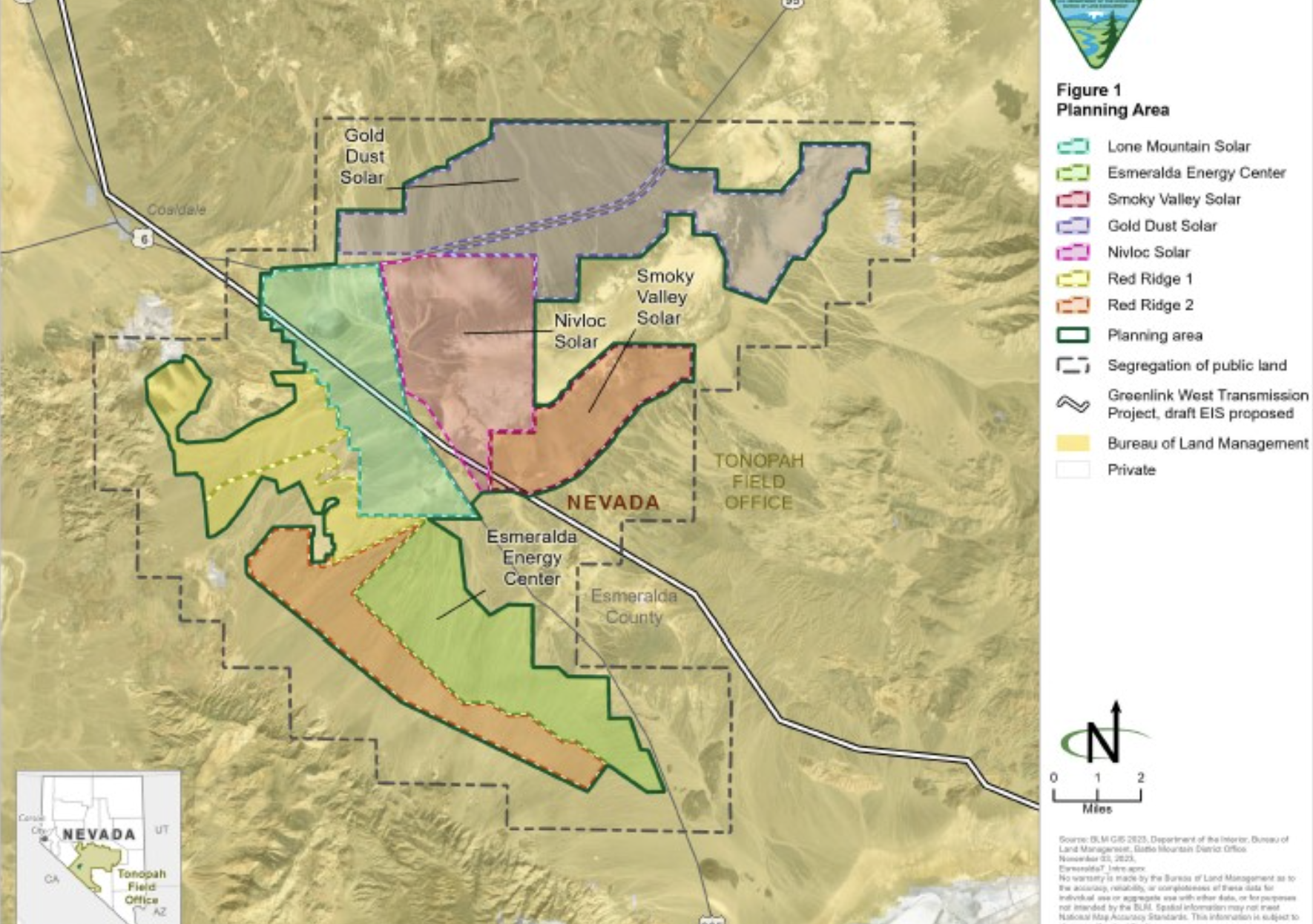
The Trump administration canceled the proposed Esmeralda 7 Solar Project in Nevada that would have been among the world’s largest solar power facilities and the largest in the United States. According to UPI News, the 6.2-gigawatt project would have built seven solar power-generation projects with battery storage within the Esmeralda site that would have occupied 118,000 acres of land in Nevada’s Esmeralda County and about 30 miles west of Tonopah and 270 miles northwest of Las Vegas. In addition to covering a huge area of desert lands, the project would have also included miles of roads and associated transmission lines.
The Bureau of Land Management (BLM) recently canceled the environmental impact statement of the proposed facility, canceling the project. According to Politico, in July 2024, the BLM under the Biden administration issued a draft programmatic environmental impact statement for the project and had planned to issue a final review document in April, but it was delayed under the Trump administration.
Some believe that the project may not be dead. The Department of the Interior indicated that developers could still get permits for their individual projects. NextEra Energy, one of the developers, plans to continue its work. Other developers include Leeward Renewable Energy, Arevia Power, ConnectGen, and Invenergy. Each subproject would need its own full review, new environmental studies, and new mitigation plans.
Actions of the Trump Administration
Interior Secretary Burgum directed his department to eliminate policies granting “preferential treatment” for wind and solar development on federal lands and waters and issued guidance stating that he would review procedural decisions for those projects. The order authorizes Burgum to conduct “elevated review” of activities ranging from leases to rights of way, construction and operational plans, and grants and biological opinions. He also signed an order that requires Interior to consider “capacity density” when evaluating solar and wind projects because they take up more land than other kinds of energy, taking over coveted farmland.
The new review requirements for wind and solar projects have slowed their development and have canceled some. The Interior Department is also investigating bird deaths and other impacts on wildlife and plant life by large solar and wind projects. The Esmeralda 7 project, for example, would have negatively impacted archaeological sites, rare plants, bighorn sheep habitat, and wilderness quality lands.
Other Solar Projects Await Action
Via Politico, at least 35 commercial-scale solar power projects that were under preliminary review by BLM when President Trump took office still await action, including final environmental impact statements for the 700-megawatt-capacity Copper Rays Solar Project, the 400-megawatt Purple Sage Solar Project, and the 300-megawatt Bonanza Solar Project, all of which are located in Nevada. Another Nevada solar power project, New Era Energy’s 200-megawatt Dodge Flat II, is still in progress and is expected to generate power by June 2027. Nevada’s vast open lands, marked by mining and sparse populations, are considered ideal testbeds for large-scale solar. Nevada already has more solar jobs per capita than any other state, according to 2023 Interstate Renewable Energy Council data.
Two major solar projects that were issued records of decision in the final weeks of the Biden administration are in limbo — the 600-megawatt Jove Solar Project in southwest Arizona and the 400-megawatt Rough Hat Clark County Solar Project in southern Nevada.
Analysis
Solar and wind are intermittent technologies dependent on the weather to create energy. When the sun is not shining and the wind is not blowing, they must be backed up by other reliable technologies, usually gas or coal, or very expensive, large storage batteries that collect excess electricity when available. The costs of the backup technology are generally not considered when the costs of wind and solar power are discussed, making them seem less expensive than what they are on a system cost and comparable basis.
While the flaws of solar and wind projects raise questions regarding the extent to which federal land managers should prioritize their construction, Interior’s cancellation of the Esmeralda 7 Solar Project continues the trend — started by President Obama’s cancellation of the Keystone XL Pipeline — of presidents canceling energy projects they disapprove of for political reasons. Preventing future abuses of presidential power requires Congressional action limiting presidential discretion over approving projects.
*This article was adapted from content originally published by the Institute for Energy Research.
The Unregulated Podcast #249: Who Cares?
On this episode of The Unregulated Podcast Tom Pyle and Mike McKenna discuss the ongoing government shutdown and how the upcoming elections in Virginia will unfold. Plus, Anthony Huston, CEO of Graphite One, joins the show for a discussion on the future of North American graphite production.
Links:
- Alaska Native corps invest in Graphite One
- Jay Jones’ Rage
- Clip: Fetterman Making the Case for the Republicans
- So Much for Peace in the Middle East
- China Rare Earths
- Drill More, Emit Less
- Climate Tipping Point
- Tweet of the Week
The Unregulated Podcast #246: Home Stretch
On this episode of The Unregulated Podcast Tom Pyle and Mike McKenna discuss the probability of a government shutdown and what it would mean for the Trump agenda, energy producers, and America at large. Plus we get playoff predictions for the MLB postseason.
Links:
AEA Webinar: 200 Actions Guided by the American Energy Blueprint
On September 18, 2025 the American Energy Alliance hosted a webinar for policymakers titled “200 Actions Guided by the American Energy Blueprint.” The full video, and additional resources, are available below.
On his first day in office, President Trump made good on his promise to prioritize American energy. With his first executive orders signed, the American Energy Alliance started tracking each action the administration and congressional Republicans were taking to unleash American energy. That list now sits at 204.
Earlier this year, the Institute for Energy Research unveiled the American Energy Blueprint, a comprehensive set of policy recommendations to guide the new Trump administration’s approach to energy policy. The American Energy Blueprint outlines key reforms in areas such as federal land and water use, expanding consumer choice, reducing subsidies, curbing government spending and taxation, reviewing regulations, and modernizing the permitting process.
In this webinar, experts from the American Energy Alliance explored changes in U.S. energy policy under the new administration. Our staff shared insights on anticipated energy policy developments from the administration and Congress through the end of 2025, followed by a Q&A session.
Moderator:
- Alex Stevens, Manager of Policy and Communications
Panelists:
- Tom Pyle, President
- Kenny Stein, Vice President of Policy
Additional Background Resources:
The Unregulated Podcast #245: Wild Blue Yonder
This week on The Unregulated Podcast Tom Pyle and Mike McKenna discuss the looming government shut down, rate hikes around the country, what is causing them, and more.
Links:
