Ex-Im Bank Won’t Solve Nuclear Industry’s Problems

Congress has until the end of June to decide whether to reauthorize the Export-Import Bank, the official credit export agency of the U.S. government. While the bank’s stated mission “is to ensure that U.S. companies—large and small—have access to the financing they need to turn export opportunities into sales,” Ex-Im has gained a reputation for favoring large, politically connected firms to the detriment of small businesses, the free market, and American families.

Ex-Im’s cronyism can be seen across the economy, particularly in the energy space. Those supporting Ex-Im, including some nuclear energy advocates, see the bank as a necessity. In a recent letter to Congress, the Nuclear Energy Institute (NEI) argued that without support from Ex-Im, it would be difficult to secure financing for the construction of nuclear reactors abroad.

Congress should let the Ex-Im Bank expire. The solution to inadequate nuclear financing is not to extend Ex-Im. Rather, nuclear advocates should focus on addressing regulations, subsidies, and mandates that put nuclear power at a competitive disadvantage in both domestic energy markets and export markets. To name a few specific policies, we recommend: 1) cutting excessive regulations that impede the licensing and construction process for reactors, 2) eliminating the wind Production Tax Credit and solar Investment Tax Credit, and 3) repealing state Renewable Portfolio Standards. Further, insofar as international banking requirements are the real impediment, nuclear advocates should focus on reforming those requirements rather than reauthorizing Ex-Im.

By focusing on Ex-Im instead of the measures outlined above, nuclear advocates miss the root cause of nuclear’s troubles: excessive government intervention. NEI’s letter is a classic example of the observation that each government intervention into the economy begets more intervention. Costly regulations and subsidies do not justify more of the same. Ex-Im supporters would get better results by streamlining regulations and reducing subsidies than asking Congress to fix government-created problems with more government.

Fixing Regulatory Barriers that Stifle a Strong Domestic Industry

One of the main barriers to a thriving nuclear industry that can compete domestically and internationally is the outdated regulatory process at the Nuclear Regulatory Commission. The current system primarily focuses on technologies that have existed in the market place for years—namely large, light water reactors. While light water reactors will likely remain the backbone of the nuclear industry for years to come, the regulatory apparatus makes it nearly impossible for new disruptive technologies to come to market. This effectively stifles the kind of innovations that could alter the domestic and international nuclear markets and make U.S. companies more competitive.

Improving the regulatory process so it moves quicker and is more technology-neutral would go a long way toward reducing costs and increasing U.S. competitiveness. Focusing efforts on Capitol Hill to these problems would do much more for the long-term health of the nuclear industry than Ex-Im ever will or could.

Streamline Permitting Process for Nuclear Exports

NEI argues in its June 4 letter to Congress that “commercial lenders are averse to financing nuclear power projects for regulatory reasons,” puts the U.S. nuclear industry at a disadvantage when competing against foreign firms. This is correct: for example, it takes between 15 to 90 days for Russian, Japanese, or Korean companies to obtain licenses for the export of nuclear materials, components, and technology. U.S. companies are forced to wait 6 months to a year.

However, taxpayer subsidies are not the solution. Instead of reauthorizing Ex-Im, the real problem holding nuclear exports back is onerous and overlapping regulations. The nuclear export licensing process falls under the jurisdiction of four agencies: Department of Energy, Department of State, Department of Commerce, and the Nuclear Regulatory Commission. Each of these agencies has a lengthy review and flawed process that companies must navigate before any proposal is approved.

Take the DOE process. According to the Government Accountability Office, “DOE rarely meets its existing target time frames for processing Part 810 applications, which calls into question whether these targets are realistic and achievable in light of its resources and authorities.” Further compounding the licensing process is the ineptitude of the interagency review process. GAO confirms that “Interagency review times missed DOE’s 30-day target for 85 of the 89 applications approved from 2008 through 2013.” The current process is broken, and no amount of funding from the Ex-Im can fix that.

Removing impediments in the licensing process would encourage lenders to invest in nuclear projects and grow the industry, thereby eliminating the need for the Ex-Im bank. This could be done in a number of ways. First, the Nuclear Regulatory Commission should be the sole agency responsible for regulating the sale of nuclear equipment and technologies, and its review process should be streamlined. Additionally, firm time limits should be placed on the licensing process to avoid overruns on the number of days between submittal and approval. These time limits should be competitive with other nations to ensure that U.S. nuclear companies can compete abroad.

Eliminate Subsidies that Harm Domestic Nuclear Power: Wind PTC and Solar ITC

While permitting delays hurt the domestic nuclear power industry, nuclear is also hurt because the federal government directly subsidizes some of the competition to nuclear. For example, the wind Production Tax Credit (PTC) and solar Investment Tax Credit (ITC) harm nuclear power by making wind and solar appear artificially less expensive. Enacted in 1992, the PTC gives wind developers a lucrative tax credit worth 2.3 cents per kilowatt-hour of electricity produced. The solar ITC gives solar producers a 30 percent tax credit on the cost of installing residential and commercial properties.

The wind PTC is so lucrative that wind producers engaged in predatory pricing because of the federal subsidies. Wind producers who receive the PTC can sometimes pay the electric grid to take their power and still profit—a phenomenon known as negative pricing. This puts existing nuclear power plants—which cannot bid artificially low prices into the grid because they cannot claim the PTC—at a competitive disadvantage to wind. Recent reports have also highlighted the problem of negative pricing when it comes to solar power. Fundamentally, the problem is that intermittent supply from wind and solar facilities simply cannot match demand in real time.

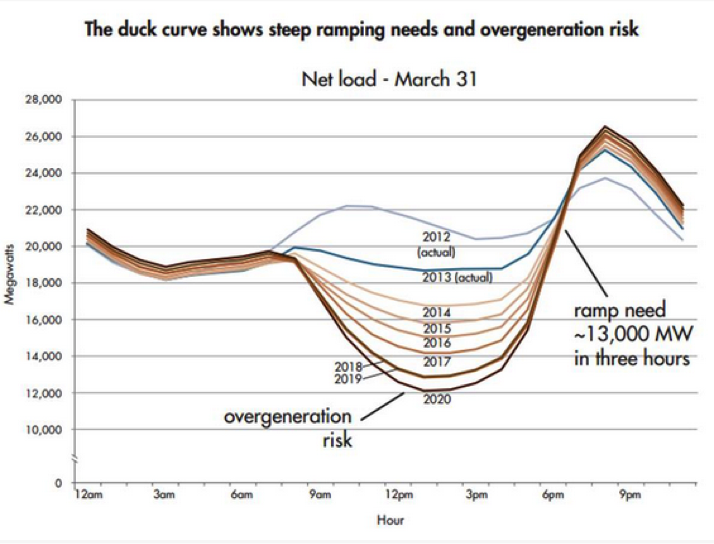
Why does negative pricing particularly harm nuclear producers? As the Energy Information Administration (EIA) notes, “negative prices generally occur more often in markets with large amounts of nuclear, hydro, and/or wind generation.” That is because each of these technologies has an incentive to continue operating even when its facilities are temporarily paying the grid to take their power. Nuclear plants are designed to run at full output and not “ramp” up and down. In times of very low demand, nuclear plants will sometimes take negative prices rather than go through the long and expensive process of lowering their output.

Unlike nuclear producers, the wind industry actually profits from negative prices because the PTC is such a large subsidy. Wind producers receive PTC payments per unit of power produced (even when the power has no value whatsoever to the grid), so they flood the grid with uneconomic power and ignore the distress signal sent by negative prices. It is also important to note that wind and solar subsidies have a draining effect on reliable power plants, whether or not prices actually dip below zero.

The threat to baseload generation from negative prices is very real. Already, Dominion closed its Kewaunee Nuclear Plant in Wisconsin 20 years ahead of schedule and Entergy has retired its . Both companies cited economic considerations as the reason for closing the plants. The DOE’s assistant secretary for nuclear energy referred to this emerging pattern of nuclear plants shutting down early as “a trend we are clearly very, very concerned about.”

Negative pricing caused by the PTC has a chilling effect on private investment. Potential lenders will only assume the financial risk of investing in new nuclear plants if they have a reasonable expectation of earning a return on that investment. Eliminating the wind PTC would send a signal to investors that nuclear power can compete and profit.

Repeal Renewable Energy Mandates

Renewable energy mandates are another government policy that disadvantages nuclear power. Currently, more than half of the states have enacted some form of an energy mandate, or RPS, which requires utilities to generate a certain percentage of their electricity from renewable sources. Though the requirements differ from state to state, the result is the same: intermittent wind and solar benefit at the expense of reliable nuclear, natural gas, and coal—and families foot the bill.

State energy mandates paired with direct subsidies for renewables present a two-pronged threat to nuclear. Energy mandates artificially increase demand for wind and solar, requiring utilities to accept renewable power over reliable power. Then, wind and solar can bid artificially lower prices into the grid since their power is subsidized, and the true cost hidden, by the wind PTC and solar ITC. These two factors combine to depress prices for wind and solar while elbowing out reliable sources of power such as nuclear.

Investors are well aware of this scheme. As long as subsidies and mandates continue to distort the market and hide the true cost of wind and solar, nuclear will remain cost-prohibitive to private capital. Focusing on increasing subsidies through the Ex-Im Bank instead of on these more fundamental impediments to the domestic nuclear energy industry risks losing the forest through the trees.

Conclusion

Nuclear energy is a proven, low-cost, reliable source of energy. Unfortunately, the licensing process for nuclear exports is too long and arduous for many investors to stomach, and other regulatory hurdles here and internationally only make matters worse. Meanwhile, subsidies and mandates for renewable energy make operating some nuclear facilities cost prohibitive, which has a chilling effect on future investment. This is why most of the new nuclear power plants are being built overseas, where regulations aren’t as onerous.

There is no doubt that American nuclear energy can thrive in the global market, but the Export-Import Bank isn’t the answer. Instead of trying to renew Ex-Im to boost their prospects, nuclear proponents should focus on streamlining the export licensing process. Domestically, eliminating subsidies for wind and solar and repealing state renewable energy mandates would help establish a more solid role for reliable nuclear power. Each of these policy changes would encourage more private-sector investment, thus building a stronger U.S. nuclear industry that is able to compete in foreign and domestic markets without taxpayer handouts.

Opinion: Fossil Fuel Divestment: Flight From Reality

Institute for Energy Research Founder and CEO Robert Bradley, Jr. penned an op-ed on Forbes.com this past week explaining why the struggling divestment movement is a solution looking for a problem. The text of the piece is below:

Forbes-logo

Fossil Fuel Divestment: Flight From Reality

By Robert Bradley, Jr.
June 15, 2015

“The effect of [divestment] decisions on the consumption of fossil fuels will be nil; the effect on the growth of institutions’ endowments will be negative.”

– George Will, “‘Sustainability’ Gone Mad on College Campuses,” Washington Post, April 15, 2015.

There is a movement afoot to slow the wheels of modern life. A highly emotional, anti-industrial fringe is urging institutions to “divest” — or sell investments in the oil, gas, and coal industries. Their goal is to keep dense, reliable, affordable energy in the ground and out of our lives.

Divestment is a solution looking for a problem. It is destined to fail for at least three reasons.

First, every American is a prolific fossil-fuel user, and substitutes (ethanol for gasoline, wind/solar for electricity) are limited, expensive unreliable options. Second, many — if not most — Americans are rewardingly invested in the oil, gas, coal, and electricity industries. Third, profit-seeking investors can be expected to buy as fringe emotional investors sell, leaving stock prices unchanged.

The irony is that the decades-old case against fossil fuels has weakened. Instead of social costs, we should think in terms of net social benefits and welcome a consumer-driven, taxpayer-neutral, free-market energy future.

Growing But Futile Movement

The list of emotional sellers is growing. Since 2012, the divestment campaign has expanded to more than 220 colleges, faith organizations, pension funds, and other institutions. Some have already sold; the others have pledged to do so.

Syracuse University is a recent example of a high-profile institution jumping on the divestment bandwagon. Influenced by climate change activist Bill McKibben’s 350.org movement, the university announced its intent to redirect the fossil-fuel portion of its $1.2 billion endowment to “clean energy” investments.

Top-tier research institutions have also joined in. Stanford decided last year to cease all direct investments in companies engaged in coal mining. Oxford University, while rejecting formal divestment, stated that it will not invest in companies that mine coal or heavy oil.

‘Market Failure’ Mirage

The fuss is long on emotion and short on evidence The Big Four issues of fossil-fuel sustainability–depletion, pollution, energy security, and climate change — have all weakened over time.

Depletion? We are not running out of oil, gas, and coal. In fact, the opposite is true. Critics who once said it would not be economical to increasingly produce oil or gas (coal supply has never been an issue) now insist that there is too much to produce and consume. Hence the call for divestment so firms have less capital to extract hydrocarbons.

Air pollution? That’s been going down as more carbon-based energy has been combusted. Since 1970, the aggregate emissions of the six criteria pollutants — including carbon monoxide, lead, and sulfur dioxide — dropped by more than two-thirds. More improvement is coming as newer, cleaner equipment replaces current inventory. By 2017, for example, smog-forming emissions from motor vehicles will have fallen by 99.4 percent since 1970.

Energy Security? The U.S. Energy Information Administration forecasts continued growth in domestic oil and gas production. By 2017, the United States will be a net exporter of natural gas. On the oil side, today’s net imports of 25 percent (way down from the peak of 60 percent in 2005) is forecast to fall to 14 percent by 2020.

Climate Change? “Where the heck is global warming” remains the major question. Global warming has nearly stalled since the late 1990s, and modest increases are well below model forecasts, as I have detailed in a previous Forbes.com post. A recent attempt to reanalyze global temperature to increase warming to predicted levels is controversial and remains the outlier.

The “pause” or “hiatus” in global warming is mainstream — and it continues. And the data on hurricanes and other extreme weather events does not suggest a positive correlation with carbon dioxide (CO2) atmospheric concentrations, which are increasing.

Compare the intellectual case for fossil fuels to the desperate analogies of Bill McKibben for divestment, the most notorious being apartheid. He recently suggested that “divestment will undercut the industry’s political power, just as happened a generation ago when the issue was South Africa.”

Such a comparison to the modern energy industry is morally repugnant — and inane. The institutional racism of apartheid has nothing to do with the fossil-fuel industries reliably and affordably supporting high standards of living for billions.

Social Costs — or Net Benefits?

Instead of exaggerated “social costs” of fossil-fuel reliance, the benefits of oil, gas, and coal over its (inferior) substitutes should be appreciated. Consumers voluntarily support gasoline, diesel, and gas-fired electricity for good reasons — and taxpayers are burdened by renewable energy for bad reasons.

Consider home energy costs. Thanks to the fracking revolution, natural gas is abundant in the United States — so electric bills are plummeting.  According to research firm IHS, households saved $1,200 in disposable income on average in 2012 thanks to lower energy costs and utility bills. By the end of this year, that figure could be closer to $2,000.

The domestic energy boom has also led to savings at the pump, thanks to plummeting oil prices. The Energy Information Administration predicts that the average U.S. household will spend nearly $550 less on gasoline this year than in 2014.

Sonecon Analysis

While the domestic energy boom is helping Americans save money on everyday expenses, investments in the industry also power Americans’ retirement savings. Almost 29 percent of fossil fuel industry shares are held by pension funds, with another 18 percent in IRAs.

These are good investments. A study by Sonecon found, for example, that oil and natural gas stocks comprising 3.9 percent of pension holdings generated 8.6 percent of the returns in those accounts. (The four-state study was from 2005 — 2009.) Another Sonecon study found that $1 invested in these stocks in 2005 grew to $2.30 by 2013. Over the same time period, that $1 would be worth only $1.68 without fossil-fuel investment.

University investments in fossil fuels have helped to grow their endowments considerably. Sonecon found that between 2001 and 2011, investments by college endowments in the oil and gas industry produced the highest returns of any other asset class. And during the 5-year period of 2006 — 2011, oil and gas stocks generated yearly average returns just under 8 percent. That was 172 percent higher than the average returns for all U.S. stocks.

According to the National Association of College and University Business Officers (NACUBO), university endowments hold an estimated $23 billion in energy stocks. Revenues generated from these investments support financial aid packages, professors’ salaries, and new infrastructure.

Fischel Analysis

Daniel Fischel, former head of the University of Chicago’s law and economics program, examined the growth of two hypothetical investment portfolios over the last 50 years. According to his analysis, $100 invested in an optimal portfolio in 1965 would yield $14,600 by 2014. But a fossil-fuel-divested portfolio yielded only $11,200 over that same time period — a shortfall of 23 percent.

In other words, divestment threatens to compromise and shrink university endowments. With aggregate endowments of $456 billion in assets (NACUBO), the Fischel-estimated cost of divestment is $3.2 billion each year. That translates into less financial aid, and thus less opportunity, for needy students.

“I conclude that the costs to investors of fossil fuel divestiture are highly likely and substantial, while the potential benefits — to the extent there are any — are ill-defined and uncertain at best,” Fischel warns.

Fossil-Fueled Future

Fossil fuels are our future. According to the U.S. Energy Information Administration’s 2015 Annual Energy Outlook, the United States will depend on fossil fuels to supply 80 percent of its energy needs in 2040. That’s not far off last year’s 82 percent. Globally, three-fourths of primary energy consumption will come from fossil fuels in 2040, the International Energy Agency predicts.

And these numbers will be higher if governments scale back their massive subsidies to renewable energies in the false hope of achieving parity with the real thing.

Instead of vilifying an industry that has been key to the enhancement of the quality of life, colleges and universities should welcome traditional energy investing. Swarthmore, for example, despite strong objections from green activists, recently decided “not to modify its investment guidelines to allow for use of the endowment to meet social objectives.”

“The divestment impulse recognizes no limiting principle,” George Will wrote several months ago. He fears “shedding investments tainted by involvement with Israel, firearms, tobacco, red meat, irrigation-dependent agriculture, etc.” where “progressivism’s dream of ever-more-minute regulation of life is realized but only in campus cocoons.”

One can only hope the divestment craze ends so that nonprofits will not have to choose between expanding educational opportunity and kowtowing to a futile political crusade.

Robert L. Bradley Jr. is the founder and CEO of the Institute for Energy Research. This post originally appeared on Forbes.

div-button-revised

10 Fatal Flaws in EPA’s Dubious Health Claims

The Environmental Protection Agency claims its proposed climate rule will drastically improve public health and save lives, but that claim is questionable. EPA has a track record of overestimating and double counting benefits, cherry picking data, misrepresenting studies, and ignoring the negative health impacts associated with poverty. Here are 10 ways the Obama administration is exploiting dubious research to push radical climate change policies.

  1. Latest science casts doubt on EPA’s health claims: While EPA claims the point of its rule is to reduce carbon dioxide related to climate change, EPA can’t actually point to any real, tangible climate impacts. Instead, EPA relies on particulate matter reductions to form the basis of its benefits. However, new research casts doubt on EPA’s central claim that the climate rule is necessary because it improves public health. A new, peer-reviewed study from researchers at Indiana University “analyzed nine air pollution regulations issued by U.S. EPA between 2011 and 2013 and found that the number of lives saved ranged from zero to 80,000. The wide range was driven largely by uncertainties over the effects of exposures to fine particulate matter, according to the study.” EPA’s dubious health claims show that the climate rule is not about health, but about advancing a political agenda designed to undermine affordable energy.
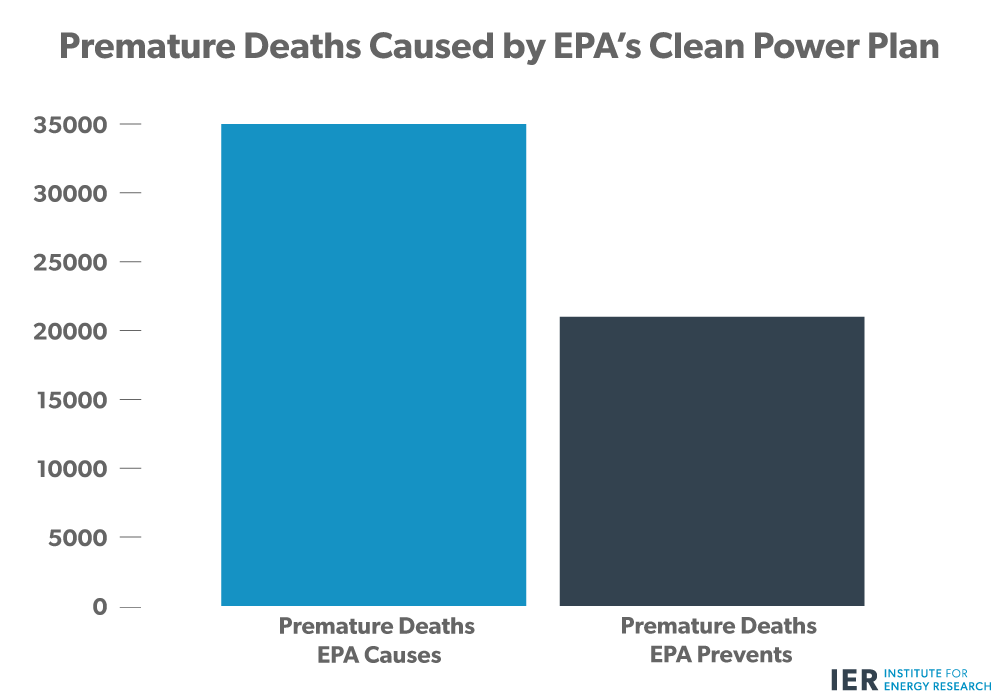
  1. EPA ignores the premature deaths it causes: EPA’s cost-benefit analysis is fatally flawed. While it likely inflates the health benefits from particulate matter, it ignores its own analysis on the relationship between income and health. In the past, EPA has admitted a positive correlation between “people’s wealth and health status, as measures by mortality, morbidity, and other metrics.” Yet the agency made no effort to quantify the wealth-health correlation in its rule, likely because EPA wouldn’t look good. As the Energy & Environment Legal Institute explains in a public comment to EPA on its ozone rule, the Office of Management and Budget recommends using a “federal estimate of one premature death for every $8.5 million ($US 2006) in reduction of disposable income.” Using a study conducted by NERA Economic Consulting, which estimates GDP losses of $366 billion, we estimate that EPA’s climate rule could result in more than 32,000 premature deaths. EPA cannot ignore these health costs.
  1. EPA’s rule harms public health: By raising energy prices, EPA’s rule will reduce the amount of income Americans, especially poor families, can spend on health and nutrition. About 9.2 million families have annual pretax incomes of less than $10,000. For those millions of families, 32 percent went without food for at least one day; 42 percent went without medical or dental care; and 38 percent did not fill a prescription or took less than the full dose, according to a report from the National Energy Assistance Directors’ Association. EPA’s rule will cause double-digit electricity rate hikes for residents of 43 states, forcing the poorest among us to make even more tradeoffs between basic necessities like food and medicine.
  1. The rule harms minorities it claims to help: Gina McCarthy has called EPA’s climate rule a “justice issue” for minorities. However, the health impacts of the rule will be especially severe for minority families, who tend to be poorer than White families. A new study by the National Black Chamber of Commerce found that the rule would increase poverty for Blacks and Hispanics by 23 and 26 percent, respectively, “thereby endangering health and safety while creating additional barriers to meaningful low-income participation in the economy.” By making poverty worse for those who can least afford it, EPA’s climate rule will make poor people sicker.
  1. The rule could exacerbate childhood asthma: President Obama and EPA claim that the climate rule will reduce the “development of asthma” in children. He even uses his daughter’s asthma to advance his political agenda. However, a Johns Hopkins study that examined data for 23,065 children across the country found that poverty was more closely linked to asthma development in children than it was to living in inner cities. The authors found that inner city living, where outdoor air pollution tends to be worse, was “not significant” in asthma development—instead, what matters is poverty. The problem is that this regulation will drive up energy prices, making it difficult to escape poverty and the bad health impacts of poverty.
  1. EPA misinterprets and cherry picks studies: EPA has a history of using dubious studies to justify air regulations. For example, Dr. William Adams at the University of California – Davis said EPA “misinterpreted the statistics contained in my published, peer-reviewed report” and “reanalyzed” his findings to justify a stricter regulation for ground-level ozone. As Dr. Julie Goodman at Harvard’s School of Public Health and Dr. Sonja Sax have explained, EPA has reviewed hundreds of studies on ozone but has not done so in “systematic fashion, by considering study strengths and limitations in a consistent manner from study to study.” This, they say, could lead EPA to “cherry picking of studies.” They conclude that “EPA assumes that ozone causes more health effects than what the science supports.” Given EPA’s dubious science on ozone, the public should be suspicious of EPA’s health claims related to its climate rule.
  1. EPA double counts benefits: Since the alleged climate benefits of EPA’s climate rule are either inflated or nonexistent, EPA is leaning on “co-benefits” of reducing pollutants, notably particulate matter. Yet EPA admits it may be double counting health co-benefits already attributed to other EPA rules: “…it is possible that some costs and benefits estimated in this RIA may account for the same air quality improvements as estimated in the illustrative NAAQS RIAs.” Benefits EPA already claims in previous rules can’t be used again to justify the climate rule.
  1. EPA ignores health impacts of job losses: The climate rule will raise electricity prices and destroy jobs. In its cost-benefit analysis, EPA does not consider the negative health outcomes associated with job losses—exactly the threat posed by higher electricity prices. A recent study found the odds of self-reporting a new health condition increase by 83 percent after losing a job due to your employer going out of business. The authors concluded these and other data “suggests that there are true health costs to job loss.” EPA ignores these health costs.
  1. EPA overestimates climate benefits: The climate rule is supposed to reduce greenhouse gas emissions associated with climate change. Yet even by EPA’s own admission, the rule has no impact on climate change. According to EPA’s own model, the rule will only limit global warming by 0.02 degrees Celsius and slow sea-level rise by just 0.01 inch by the year 2100. Moreover, a Brookings paper found that EPA is overestimating climate benefits by a factor of 15. A more traditional cost-benefit analysis would estimate climate benefits of only $2 billion to $7 billion – less than the estimated compliance cost of the rule. Since EPA can’t point to any tangible climate benefits—sea levels or temperatures—the agency calculates its climate benefits using the “social cost of carbon,” an arbitrary metric that many economists criticize for having little basis in reality.
  1. America’s air quality is excellent: Since the EPA can’t point to any tangible climate impacts of its climate rule, the agency derives most of its benefits from reducing air pollutants such as particulate matter and ozone. EPA, however, already regulates these pollutants through other parts of the Clean Air Act. Furthermore, these pollutants are already declining without the climate rule. Air quality in the United States has greatly improved in recent decades: the six criteria pollutants have declined 62 percent since 1980, according to EPA data. Our air is cleaner than it’s been in generations, and cleaner than Europe’s air despite the fact that EU countries impose cap-and-trade and other controls the EPA wants to replicate here. In fact, according to EJ Calabrese at the University of Massachusetts, we may have already reached the diminishing marginal return on health benefits for reducing PM and ozone levels.

EPA’s climate rule will impose enormous economic costs for dubious health benefits. The public should not trust EPA’s health claims, as the agency has a long history of manipulating science, inflating benefits, and ignoring costs to advance its agenda. As a result, EPA should rescind its proposed climate rule.

Governor Christie, I Award You No Points…

At a recent event in New Hampshire, New Jersey Governor and potential presidential candidate Chris Christie was asked by a member of the crowd his stance on the Renewable Fuel Standard (RFS). In the past, Christie has come out in support of the mandate, telling Iowans that he “absolutely” supports the RFS because “it is what the law requires.”

At the New Hampshire event, Rep. Joe Pitre (R-Strafford) asked “in light of the EPA’s recent proposal to roll back the amount of ethanol blended into our gasoline supply, would you support reforming this policy to protect consumers from the costs of this broken policy?”

Based on Christie’s past support for the RFS, one would think that he would be able to field this straightforward question. His response was anything but clear:

Listen, what I’ve said before about this is that, you know, Congress has to decide what they want to do here. The fact is they have renewable fuel standards on the books that they’re not enforcing, and they haven’t enforced.

First off, it is actually the executive branch, specifically the EPA, that is tasked with enforcing the RFS. Just like Gov. Christie (presumably) learned in school, Congress is responsible for passing laws, while the executive branch is responsible for administering laws. Christie continued:

Well, if they want to change them that’s the President’s problem that he hasn’t enforced them and put those things into effect as the executive. Congress has put them on the books. So Congress, or the President, needs to do one of two things: take them off the books and do what you’re suggesting, or enforce the law as it is now.

Wrong again. Congress is responsible for changing the RFS, not the President. Further, Congress has actually been considering repealing the RFS altogether, which would end this costly, broken mandate. More insights from Christie:

But right now we live in a kind of Neverland in between because nobody knows what they want to do. So my view of it is let the President state where he’s at, let the Congress either do or not do what they’re saying their position is before all of us start weighing in and deciding what we want to do…

The EPA has made its position very clear based on its most recent decision to dramatically increase cellulosic biofuel. If Gov. Christie had a grasp on the issue at hand, he would realize that the EPA’s levels for cellulosic biofuels are wildly unrealistic and will lead to increased gas prices for consumers.

Christie then laid out a vague energy platform in which he discussed lifting the oil export ban and promoted hydraulic fracturing, nuclear energy, and solar energy. However, he gets tied up again when he tries to circle back to the RFS:

Ethanol and the Renewable Fuel Standard has to be judged and prioritized within that menu of options and, if I were President of the United States I would set out a national energy policy… and we would make those decisions based on cost and effectiveness of the program, and not upon anything else. And that’s the way I’d make that judgment.

If he were judging the program based on cost and effectiveness he should have no trouble supporting efforts to completely repeal this mandate because it is both ineffective and costly for consumers.

So the verdict, Governor Christie, can be summed up by the following video:

Under EPA Rule, Blacks and Hispanics Suffer the Most

The Environmental Protection Agency’s so-called “Clean Power Plan” will impose severe economic burdens on Black and Hispanic families, according to a new study from the National Black Chamber of Commerce. Rising electric rates and job losses expected under the EPA’s rule will have a disproportionate impact on poor people and minorities, who spend a higher share of their household budgets on energy.

NBCC’s study shows that EPA’s agenda will inflict the most pain on those who can least afford it, “thereby endangering health and safety while creating additional barriers to meaningful low-income participation in the economy.” The study’s key findings include impacts on poverty, jobs, and income:

  • By 2035, Black poverty rises by 23% and Hispanic poverty by 26%. Over the same period, energy burden of Blacks increases by more than one-third and Hispanics by more than 35%.
  • In 2035, 535,000 Black jobs would be lost and nearly 900,000 Hispanic jobs would be lost. Cumulative job losses for Blacks and Hispanics total about 7 million and nearly 12 million, respectively.
  • Black median household income will be $455 less than under the reference case, and Hispanic median household income will be $515 less.

As the following chart shows, Blacks and Hispanics will suffer more under the EPA’s rule because they spend a much higher percentage of their income on energy costs than White families:

energy expend

EPA’s rule amounts to an energy tax on the poor and minorities. Fortunately, a growing number of states are fighting back. But time is running out, with EPA expected to finalize its rule in the next few months. State leaders that want to protect the interests of their most vulnerable constituents should act now by refusing to submit a compliance plan to the EPA.

EPA to States: ‘Flexibility’ Means Many Ways to Fail

One way to tell if someone is lying is if they tend to excessively repeat words and phrases. As a case study, the Environmental Protection Agency can’t stop saying the word “flexible.” The EPA uses it to describe its so-called “Clean Power Plan” forcing states to impose strict carbon dioxide reductions, with some variation of the word appearing 163 times in the proposed rule. The gist of the claim is that “each state will have the flexibility to select the measure or combination of measures it prefers in order to achieve its CO2 emission reduction goal.”

As we have explained before, the EPA’s claim doesn’t reflect reality. The emission reductions are so severe that the rule pressures states to adopt costly policies that were either too politically unpalatable for President Obama to pass when his party controlled Congress (cap-and-trade, carbon tax) or are being rolled back in states that enacted them (renewable energy mandates).

In case you had any doubt that EPA isn’t sincere about its flexibility claim, consider this recent opinion piece in The Wall Street Journal. In it, Ben Zycher at the American Enterprise Institute explains how the EPA’s key “building blocks”—which EPA touts as evidence of its flexibility—are “mutually inconsistent” and unworkable.

In other words, the EPA’s “Clean Power Plan” is flexible in the sense that it gives states numerous ways to fail. Here we excerpt Mr. Zycher’s piece at length to explain how the building blocks conflict:

FERC and those in the industry it regulates seem to realize what the EPA does not: that the agency’s “building blocks” are mutually inconsistent. The recommended 6% efficiency improvement for coal plants is prohibitive in cost because their individual operating characteristics—the types of coal they use, operating pressures, emissions equipment, etc.—are predetermined in their designs and extremely difficult to change. Few if any owners of coal plants will be willing to make that huge investment. Moreover, the recommended increase in the capacity utilization of natural gas combined cycle (NGCC) turbines to 70% from roughly 45% today means reduced output and a smaller market share for coal.

The coal-efficiency path is made even more difficult by the EPA’s recently implemented Mercury and Air Toxic Standards. Compliance with this new rule requires the installation of costly scrubbers and other equipment that reduce operating efficiency.

The increase in the utilization of natural-gas plants also conflicts with the increase in wind and solar power. Because renewables are unreliable, they must be backed up by coal- and gas-fired plants, which must be cycled up and down depending on whether the wind is blowing or the sun is shining. This cycling reduces efficiency for the backup coal and gas plants in much the same way as stop-and-go driving cuts automotive fuel efficiency, and this will make it more difficult for gas plants to achieve higher capacity utilization.

The “energy efficiency” path means a reduction in demand for both coal- and gas-fired power, again inconsistent with investment in improved coal efficiency, and with the envisioned increase in the utilization of gas plants.

No one knows how this demand reduction will affect power consumption at peak periods relative to off-peak ones. This will exacerbate the uncertainties regarding investment in new power plants, which will again increase costs and create significant risks to the reliability of the grid.

The operators of electricity systems have always used the cheapest power first and then more-expensive power as demand increases through a given day. How will costs and reliability change when they are forced to adopt a convoluted system combining operating cost and greenhouse gas considerations? No one knows.

Resistance Gaining Momentum in States

States that don’t want to accede to the EPA have a way out: don’t submit a state plan. Already several states are realizing that working with the EPA is more trouble than it’s worth:

  • In April, Oklahoma Governor Mary Fallin signed an executive order preventing her state’s environmental regulators from developing and submitting a state plan.
  • Texas Governor Greg Abbott believes the rule will result in “grave consequences” for Texas, offering his “full support” to Senate Majority Leader Mitch McConnell, who has encouraged states that want to resist to refuse to submit plans to EPA.
  • Wisconsin Gov. Scott Walker recently called the EPA’s plan “unworkable” for the Badger State, highlighting the rule’s many “inaccuracies, questionable assumptions and deficiencies.”
  • Newly elected Chairman of the Texas Railroad Commission, David Porter, said last week after his election, “Perhaps our greatest challenge comes from EPA regulations brought on by Obama’s war on fossil fuels.”
  • Former North Dakota Public Service Commissioner Tony Clark has testified that the rule forces states into “a comprehensive ‘mother may I?’ relationship with the EPA that has never before existed.” Clark is currently a member of the Federal Energy Regulatory Commission.

These statements are in addition to bills proposed in several other states that would require legislative approval before a state agency can submit a compliance plan to the EPA. For states that want to retain their flexibility, resistance isn’t futile—it’s necessary.

Conflict of Interest: EPA’s Ozone Rule vs. the CPP

The Environmental Protection Agency (EPA) is pursuing an aggressive regulatory agenda so sprawling that at least two of its major regulations seem to conflict with one another, undermining the agency’s stated goals. EPA has proposed severe reductions in ground-level ozone levels, but complying with that rule could hamper states’ ability to comply with the EPA’s so-called “Clean Power Plan.”

EPA’s ozone limits would likely restrict natural gas production in key shale gas regions. Yet using more natural gas is a crucial “building block” of the EPA’s CO2 rule—EPA Administrator Gina McCarthy has even called natural gas a “game changer” in this regard. If using more natural gas were off the table due to new ozone limits, many states would likely find it more difficult and expensive to comply with EPA’s CO2 regulation.

The bottom line: EPA’s regulatory agenda contradicts itself while imposing enormous economic costs on Americans, all while air quality continues to improve without further federal intervention. For these reasons, EPA should withdraw its ozone and carbon dioxide rules.

How EPA’s Ozone Rule Conflicts with “Clean Power Plan”

EPA has proposed cutting the National Ambient Air Quality Standards (NAAQS) for ozone from 75 parts per billion (ppb) to between 70 and 65 ppb (the agency will accept comment on as low as 60 ppb). Setting aside the dubious science EPA uses to justify further lowering the ozone standard, if EPA sets the standard at 65 ppb, it would put vast swaths of the country in so-called “nonattainment.” (According to an analysis by NERA Economic Consulting, that could make the rule the single costliest regulation in U.S. history.)

A nonattainment designation forces states to implement various pollution control measures, some of which EPA hasn’t even defined. These controls could impact a variety of manufacturing activities, including natural gas production. According to the National Association of Manufacturers (NAM), “New oil and natural gas production could be significantly restricted in parts of the country classified as ‘nonattainment’ areas, limiting supplies of critical energy resources and potentially driving up costs for manufacturers and households.”

Below is a map of area NAM predicts would be deemed in nonattainment under a 65 ppb ozone standard.

Areas Expected to Violate 65 ppb Ozone Standard

NAM 65 ppb

Source: National Association of Manufacturers and American Petroleum Institute

If the above map is accurate, areas with some of the largest shale gas plays in the country could be deemed in non-attainment under EPA’s ozone rule. These shale formations represent half of all U.S. natural gas production and are responsible for almost all of recent production growth that is powering America’s domestic energy boom. In the below map from the American Chemistry Council, note the overlap between potential nonattainment areas and U.S. shale plays:

U.S. Natural Gas Areas Threatened by 65 ppb Ozone Standard

U.S. nat gas areas 65 pbb

Source: American Chemistry Council

As the map shows, large swaths of almost every shale gas formation, including six out of the top seven plays, could fall into nonattainment under EPA’s proposed ozone rule. Those six shale formations—the Marcellus, Eagle Ford, Haynesville, Permian Basin, Niobrara, and Utica—accounted for close to 100 percent of domestic natural gas production growth over the last three years.

EIA shale plays

Source: Energy Information Administration

If EPA’s ozone rule curtails natural gas production in these key shale areas, it could complicate compliance with EPA’s so-called “Clean Power Plan.” EPA has proposed cutting carbon dioxide levels by 30 percent by 2030. One of the four “building blocks” on which EPA’s CO2 rule rests is shuttering coal-fired power plants and replacing them with gas-fired plants. This fuel switching, and being able to do it without dramatically higher electricity and natural gas prices, depends on our ability to continue producing large amounts of natural gas from shale formations—many of which are threatened with “nonattainment” under EPA’s ozone rule.

Notably, threatened areas include nearly all of the Marcellus shale, which produces twice as much natural gas as the next two largest formations combined. The below map shows the overlap between Pennsylvania’s Marcellus shale and expected ozone nonattainment areas:

marcellus-shale-mapIER

The same is true for the other shale plays above, including Colorado’s Niobrara, Texas’ Permian Basin and Eagle Ford, Louisiana’s Haynesville, and Ohio’s Utica. Most of Colorado’s natural gas output, for instance, is concentrated in the northern Front Range, much of which NAM expects to receive a nonattainment designation under a 65 ppb ozone standard. That could jeopardize Colorado’s thriving energy industry, whose dramatic growth has made the state the sixth largest natural gas producer.

It’s worth noting that EPA is also clamping down on methane emissions, which could also curtail natural gas production.

Natural Gas Key ‘Building Block’ of EPA’s CO2 Rule

Increasing natural gas use is critical to EPA’s costly CO2 rule. But if EPA’s ozone rule constrains natural gas production, it could limit states’ options for complying with EPA’s CO2 rule—despite EPA claiming its CO2 rule offers states “flexibility” to choose how to comply. Even Gina McCarthy admits that natural gas is crucial to EPA’s CO2 agenda: “natural gas has been a game changer with our ability to really move forward with pollution reductions that have been very hard to get our arms around for many decades.”

If less affordable natural gas is available, compliance costs for EPA’s CO2 rule would likely skyrocket. EPA talks about using renewables like wind and solar, but these sources are not substitutes for natural gas because wind and solar cannot be counted upon to produce electricity when it is needed. The other building blocks—heat-rate improvements at coal plants and energy efficiency mandates—can only go so far. Without natural gas as a “game changer,” states’ options for compliance will be significantly more limited and costly.

Conclusion

EPA’s regulatory agenda has become so expansive that the agency’s own rules conflict with one another. EPA’s ozone rule undermines the foundation of EPA’s CO2 rule. While EPA’s CO2 rule drives the use of more natural gas at the expense of coal, the agency’s ozone rule could restrict natural gas output in key shale formations right when states need more natural gas to comply with the CO2 rule. EPA could simply exempt shale-producing regions from its ozone rule, but that fails to address the more fundamental problem: EPA’s out-of-control agenda.

EPA’s regulations impose huge costs for small benefits. The agency’s ozone rule could be the single costliest regulation in U.S. history, even though ozone emissions have declined 33 percent since 1980. Meanwhile, EPA’s CO2 rule will impose double-digit electricity rate hikes for residents of 43 states, but limit global warming by just 0.02 degrees Celsius. The solution is for EPA to withdraw its proposed ozone and CO2 rules.

This post originally appeared on the Institute for Energy Research blog

AEA Applauds WV Delegation & Rep. Cramer for Standing Up to EPA

Recently, several members of Congress have taken the initiative to fight back against the EPA’s proposed Clean Power Plan. The rule, to be finalized sometime this summer, will shutter roughly 90 GW of coal-fired electricity, according to the Energy Information Administration. This will threaten the reliability of the grid and cause electricity prices to skyrocket.

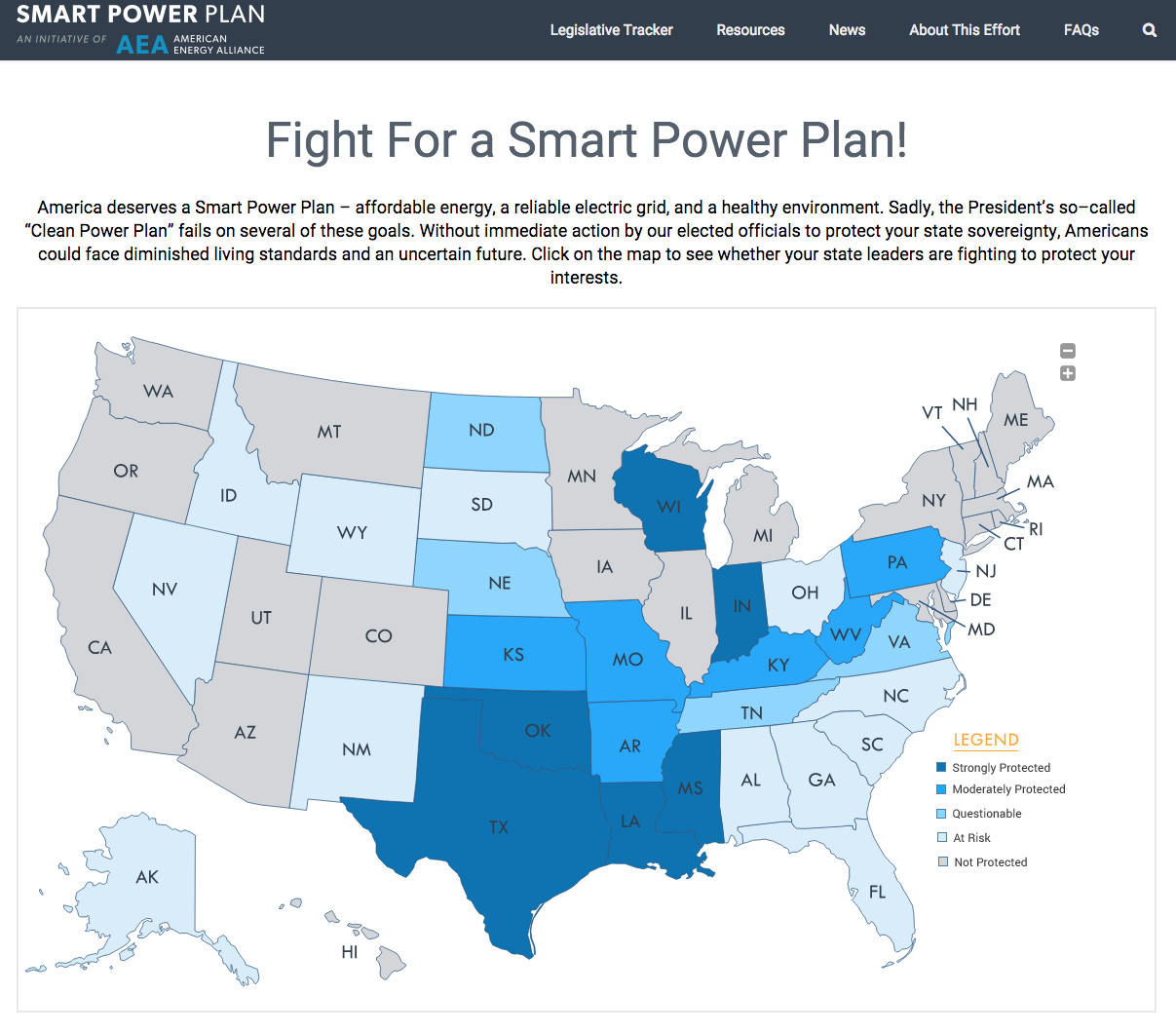
In March, Sen. McConnell urged states to protect their sovereignty over state energy policy by refusing to submit a State Plan to the EPA. Rep. Kevin Cramer has followed this lead and urged legislators in his home state of North Dakota, as well as Governor Dalrymple, to resist sending a State Plan to the EPA.

In his letter to Governor Dalrymple, Rep. Cramer calls the EPA’s bluff on the CPP:

It is my belief the president’s administration is aware of this and hoping enough States will voluntarily cede their rights by proposing CO2 reduction plans beyond the fence in order to meet their given goals. If you are to submit a plan to the EPA, I urge you to only consider commercially feasible improvements within the fence of an emitting source. I am aware this will not likely reach EPA’s goal, but it’s an unreasonable goal given the timeline of infrastructure construction, the availability of commercially feasible and reliable low-carbon power, and again, ceding States’ rights to the Federal government. I believe in the ingenuity of Americans and North Dakotans to achieve a lower-carbon economy if they so choose, but this is not the plan to do it for many reasons beyond those I have touched on here.

Similarly, the West Virginia Delegation sent a letter to Governor Earl Ray Tomblin, urging him to also resist the EPA’s power grab:

The EPA is trying to compel states to do more themselves than what the agency would be authorized to do on its own. Therefore, we urge you to join your fellow Governors of Texas and Oklahoma by refusing to submit a SIP to the EPA and subjecting West Virginians to this overreaching plan. By declining to submit a plan you will give the courts the necessary time to rule on whether the EPA’s proposed rule is legal while also giving Congress a chance to address its concerns with the plan.

Despite the loud rhetoric from proponents of the rule, compliance in the form of a state plan could have severe ramifications as written about here and here. State elected officials would be wise to heed this advice and take action ensuring they are part of any decision that subjects their constituents to the EPA’s costly federal energy takeover.

The American Energy Alliance applauds Rep. Cramer and Reps. McKinley, Mooney, and Jenkins and we urge all Members of Congress to take similar action to support their states in the fight against the EPA’s unworkable rule.

Critics Flunk Lobby Group’s Bogus Air Quality Report

Nearly 40,000 fitness enthusiasts enjoyed Pittsburgh’s annual marathon last month, with dozens of professional athletes and runners as old as 85 participating in the weekend-long event. Despite the marathon’s ranking as one of the best in the world due to its scenic routes and ideal conditions for distance running, the American Lung Association gave the city an “F” for its allegedly filthy air in its recently released 2015 “State of the Air” report.

Pittsburgh’s air has remarkably improved since 2011—the Allegheny Institute noted that fine particulate matter has dropped by 13 percent in the area, and in 2013, none of Allegheny County’s 11 air monitoring stations averaged pollution levels above the Environmental Protection Agency’s (EPA’s) standards.

Oddly, the Lung Association, which also uses EPA data for its report, smeared the entire Pittsburgh metro area—a three state, 12 county region—as one of the most polluted in the nation—a distinction the Association has repeatedly awarded to the city over the last several years. In order to get to this predictable conclusion, the Association relies on old pollution information and cherry-picks data to ensure the dirtiest possible readings for the city. The Allegheny Institute labeled the “bogus” report’s evidence as “junk science,” and the Pittsburgh Post-Gazette editorial board noted just a few examples of the Association’s flawed methodology:

“[T]he association uses the reading of the single dirtiest pollution monitor to represent the air quality of the entire region. In Pittsburgh’s case, that is usually the monitor at Liberty, which measures the air near U.S. Steel’s Clairton coke works, one of the most polluted spots in the nation.

But the Liberty monitor’s readings do not reflect air quality across Allegheny County, let alone the other 11 counties, three of them in West Virginia and Ohio. For instance, eight monitors are situated across Allegheny County to measure fine particulate; three are placed in different locations to gather data on ozone. Overall, the 12 counties in the Pittsburgh metro have 20 pollution monitors, and none of them records the kind of readings taken near the nation’s largest coke plant.

Given this level of statistical malpractice, it scarcely matters that the lung association this year ranks the 12-county region as 10th most polluted in the nation for short-term particulate, ninth worst for year-round particulate and 21st worst for ozone. The truth is that only the region’s dirtiest monitor — one out of 20 — has those rankings against the dirtiest monitor of every other region.”

To read the rest of the editorial, click here.

To learn about the dubious science behind federal air pollution policy, click here.

AEP Closes 5,588 Megawatts of Coal Capacity

Coal-fired electricity generators that once powered 5.5 million homes have closed permanently, according to a recent announcement from the Columbus, Ohio-based electric utility American Electric Power (AEP). The 5,588 megawatts (MW) of coal capacity located across Appalachia and the Midwest are the latest casualties in the continued assault on affordable, reliable power by the Environmental Protection Agency (EPA) under President Obama.

Specifically, AEP’s announcement says the utility closed coal-fired units at 10 power plants in five states—three in Ohio, three in West Virginia, two in Virginia, one in Indiana, and one in Kentucky. The closures are a direct result of EPA’s Mercury and Air Toxics Standard rule (MATS), which was proposed in 2011, finalized in 2012, and took effect this year.

The coal plant closures were expected but unfortunate nonetheless. In 2011, the New York Times published a story foretelling the closure in 2015 of an estimated 6,000 MW of AEP coal capacity due to the rule. Shutting down the reliable, affordable production of electricity from coal plants not only causes problems on the grid but also leads to higher electricity bills for everyone.

More Closures Expected

These 5,588 megawatts of coal capacity represent only 40 percent of the 13,000 MW of coal capacity that the Energy Information Administration (EIA) estimates will retire in 2015. The AEP closures underscore the broader effects of the Obama administration’s anti-energy policies, which threaten to erode the reliability of the power grid, increase the cost of electricity, and displace workers.

AEP is just one utility. Nationally, we estimate that 72,000 MW of reliable electricity from coal-fired power plants will be shut down due to regulations from the EPA, including MATS and the early effects of EPA’s carbon dioxide regulations. The 72,000 MW estimate is based on actual policy-driven closures announced by utilities, as well as EPA’s own estimates of future closures. Our conservative estimate should be considered the lower bound for power plant closures.

According to the EIA, the non-partisan data arm of the Department of Energy, EPA’s carbon dioxide regulations on existing power plants (to be finalized later this summer) will raise the total number of coal-fired capacity retirements to 90,000 MW. That figure includes closures directly caused by regulations such as MATS and the new carbon dioxide rules, as well as some closures that were not primarily driven by regulations.

Buyer Beware

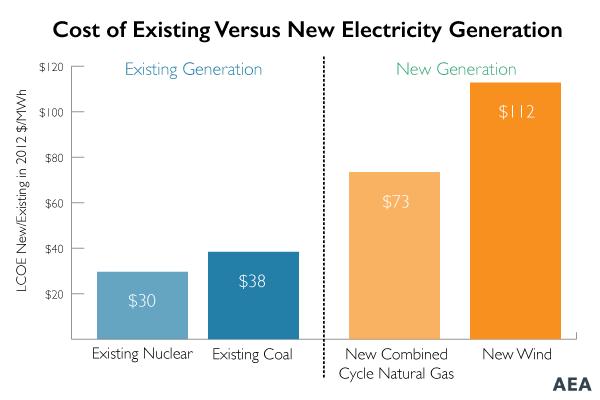
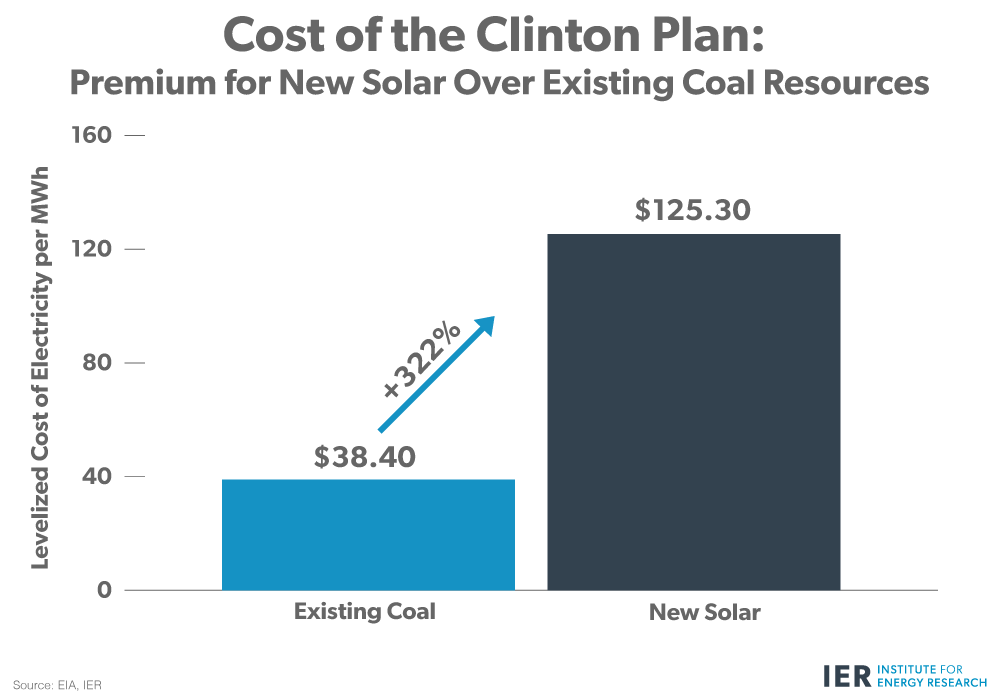
Replacing existing coal-fired power plants with any new source of electricity generation is incredibly costly, even when a relatively low-cost new source such as combined cycle natural gas-fired plants is built. As we highlight in a forthcoming policy report, the levelized cost of electricity from the existing coal fleet is about $38 per megawatt-hour. In contrast, the levelized cost of electricity is about $73 from new combined cycle natural gas plants and $113 from new wind turbines.[1] Hence, closing coal-fired power plants and replacing their output with that of natural gas or wind plants doubles or triples the cost of the replaced electricity.

In AEP’s case, coal plant closures coincide with increased rates. AEP’s regulated fleet of generators—that is, power plants whose costs are recouped automatically through state-regulated rate formulas that include a guaranteed return on investment for new plants—actually becomes a moneymaker in the presence of costly regulations from the EPA. That is because the increased costs of complying with EPA rules pass through directly to consumers.

The West Virginia Public Service Commission, for example, recently awarded AEP an overall 9 percent increase in rates, which translates to a $123 million increase in revenue. For residential customers in West Virginia, their electricity rates will increase more than 16 percent. Simply put, AEP is doing fine while American families pick up the tab. Perhaps that is why AEP does not necessarily oppose EPA’s regulation of carbon dioxide emissions from power plants, but only opposes the timelines EPA has given to implement the regulations.

Conclusion

Reliable electricity generation has been a cornerstone of the American way of life for over a century. Recent EPA regulations—such as the mercury rule that took effect this year and the carbon dioxide regulations that are being finalized now—are a very real threat to the reliability and affordability of electricity in the U.S. Adding insult to injury, the costs of EPA’s regulations ultimately fall on American families. As we have seen with previous EPA rules, regulated utilities simply pass the increased costs on—and in many cases actually increase profit—while the bill goes to the rest of us through rate increases.


[1] The Levelized Cost of Electricity from Existing Generation Resources, Institute for Energy Research (forthcoming).