After a brief hiatus The Unregulated Podcast returns with Tom and Mike joined by special guest Lou Pugliaresi and cover all the news that broke in the intervening weeks.
Links:
Thanks for joining the AEA efforts to help combat rising energy prices. We don’t want to bug you that often, so let us know what energy issues interest you, and we’ll keep your inbox happy.
After a brief hiatus The Unregulated Podcast returns with Tom and Mike joined by special guest Lou Pugliaresi and cover all the news that broke in the intervening weeks.
Links:
WASHINGTON DC (8/7/25) – Since taking office on January 20, 2025, President Trump, alongside congressional Republicans, has spearheaded a transformative agenda to secure American energy abundance, reduce costs for consumers, and bolster economic growth. Together, they have taken over 200 actions to unleash our energy potential.
AEA President Thomas Pyle issued the following statement
“In just 200 days, the Trump administration, in partnership with the Republican-led Congress, has surpassed the energy policy achievements of previous administrations, delivering unprecedented progress toward American energy prosperity. With over 200 actions taken to advance an energy-first agenda, the administration has made it clear that the United States is putting an end to the failed policies of the past. The passage of the historic Big Beautiful Bill, combined with efforts to eliminate barriers to energy production, marks a bold and dynamic start to a presidency dedicated to securing our energy future for the benefit of all Americans.”
AEA Experts Available For Interview On This Topic:
Additional Background Resources From AEA:
For media inquiries please contact:
[email protected]
President Donald Trump and congressional Republicans ran on a plan for American energy: make it easier to produce and more affordable to purchase. Since President Trump took office, his administration and congressional allies have taken over 200 actions to unleash America’s energy potential. A list of those actions appears below.
January 20, 2025
January 31, 2025
February 3, 2025
February 7, 2025
February 14, 2025
February 25, 2025
February 26, 2025
February 28, 2025
March 5, 2025
March 6, 2025
March 10, 2025
March 12, 2025
March 13, 2025
March 19, 2025
March 20, 2025
predictable, and affordable supply of minerals.
March 28, 2025
March 24, 2025
April 1, 2025
April 7, 2025
April 8, 2025
April 9, 2025
April 10, 2025
April 11, 2025
April 17, 2025
April 18, 2025
April 23, 2025
April 24, 2025
April 25, 2025
April 28, 2025
May 2, 2025
May 5, 2025
May 12, 2025
May 13, 2025
May 14, 2025
May 19, 2025
May 20, 2025
May 21, 2025
May 22, 2025
May 22, 2025
May 23, 2025
May 29, 2025
June 3, 2025
June 5, 2025
June 11, 2025
June 12, 2025
June 17, 2025
June 18, 2025
June 20, 2025
June 25, 2025
June 30, 2025
June 30, 2025
July 4, 2025
July 7, 2025
July 8, 2025
July 9, 2025
July 10, 2025
July 11, 2025
July 12, 2025
July 16, 2025
July 17, 2025
July 24, 2025
July 25, 2025
July 28, 2025
July 29, 2025
August 1, 2025
August 4, 2025
August 5, 2025
WASHINGTON DC (8/6/25) – Today, a coalition of 16 organizations, led by the American Energy Alliance, sent a letter to the U.S. Department of the Treasury and the Internal Revenue Service (IRS) providing suggestions on how to carry out the statutory language of the recently enacted One Big Beautiful Bill Act (H.R. 1, “OBBBA”). The text of the letter and the list of signers are available here.
American Energy Alliance President Tom Pyle released the following statement:
“The Big Beautiful Bill’s passage into law marked a pivotal shift in federal energy tax policy; the IRA guidance needs to reflect that change to follow the text and intent of the law. We, as an organization, have said repeatedly that in order to follow the law, the administration needs to tighten Treasury rules. Ensuring that legitimate efforts are made to start construction and not allowing the gamesmanship the Obama administration enabled will ensure that the energy subsidy lobby doesn’t continue to game the system at the public’s expense. Congress did its job to promote energy reliability and end the subsidy gravy train. Now it’s the administration’s turn to implement these reforms in good faith and carry them out as intended.”
Key points from the letter:
AEA Experts Available For Interview On This Topic:
Additional Background Resources From AEA:
For media inquiries please contact:
[email protected]
On Wednesday, August 6th, a coalition of sixteen organizations dedicated to preserving free markets and putting taxpayers and consumers first, led by the American Energy Alliance, sent a letter to U.S. Treasury Secretary Scott Bessent providing suggestions on how to carry out the statutory language of the recently enacted One Big Beautiful Bill Act (H.R. 1, “OBBBA”). The text of the letter, and list of signatories, is available below.
U.S. Department of the Treasury
Office of the Secretary
1500 Pennsylvania Avenue, NW
Washington, D.C. 20220
August 6, 2025
Re: Request for Revision of IRS Notices related to the One Big Beautiful Bill Act
Dear Secretary Bessent,
We respectfully request that the Internal Revenue Service revise IRS Notices 2013-29, 2013-60, 2014-46, 2015-25, 2016-31, 2017-4, and 2021-41 to align with the statutory provisions enacted under the One Big Beautiful Bill Act (H.R. 1, “OBBBA”).
Background and Statutory Context
The One Big Beautiful Bill Act (OBBBA) sunsets the generous subsidies for wind and solar generation in the Clean Electricity Production Credit and the Clean Electricity Investment Credit of the Inflation Reduction Act of 2022 (IRA). The law, however, does not define some key provisions. President Trump signed the OBBBA into law on July 4, 2025. Subsequently, on July 7, 2025, the president signed Executive Order 14315 (“Ending Market Distorting Subsidies for Unreliable, Foreign-Controlled Energy Sources”), which directs the Secretary of the Treasury to “take all action as the Secretary of the Treasury deems necessary and appropriate to strictly enforce the termination of the clean electricity production and investment tax credits under sections 45Y and 48E of the Internal Revenue Code for wind and solar facilities.”
The Executive Order specifically requires issuing “new and revised guidance as the Secretary of the Treasury deems appropriate and consistent with applicable law to ensure that policies concerning the ‘beginning of construction’ are not circumvented, including by preventing the artificial acceleration or manipulation of eligibility and by restricting the use of broad safe harbors unless a substantial portion of a subject facility has been built.”
Critically, the OBBBA explicitly codifies only IRS Notice 2013-29 and Notice 2018-59 for purposes of the prohibited foreign entity rules under new section 7701(a)(51), but this incorporation is limited in scope, and these notices were not codified for purposes of the Clean Electricity Production Credit and the Clean Electricity Investment Credit.
Specific Issues Requiring Clarification
1. Limited Scope of Notice Incorporation
The text of OBBBA at section 7512(c) states that “the beginning of construction with respect to any property shall be determined pursuant to rules similar to the rules under Internal Revenue Service Notice 2013-29 and Internal Revenue Service Notice 2018-59 (as well as any subsequently issued guidance clarifying, modifying, or updating either such Notice), as in effect on January 1, 2025”. However, this codification applies solely to the prohibited foreign entity provisions and does not extend to:
2. “Beginning of Construction” Standard for Clean Energy Credits
For the Clean Electricity Production Credit (Section 45Y) and Clean Electricity Investment Credit (Section 48E), the OBBBA does not incorporate the existing IRS notice framework. This creates regulatory uncertainty regarding the “beginning of construction” requirements for these technology-neutral credits.
The statute requires clarification that for these credits, “beginning of construction” means the commencement of physical construction of the electricity-producing equipment itself, not merely preparatory activities or financial commitments.
3. Elimination of the “Five Percent Safe Harbor”
The Obama administration, starting in 2013, created a non-statutory “safe harbor” whereby construction is deemed to begin when a taxpayer has paid or incurred at least 5% of the total project cost. Under that framework, “construction begins when 5% or more of the facility’s total cost has been paid or incurred” under the Five Percent Safe Harbor test.
However, the OBBBA’s statutory framework, particularly for wind and solar facilities subject to accelerated phase-outs, suggests legislative intent to eliminate this financial safe harbor in favor of requiring actual physical construction activities.
4. “Continuous Program of Construction” Standard
The revised IRS notices should specify that a “continuous program of construction” must involve continuing physical work of a significant nature on the electrical-generating equipment itself. This represents a more stringent standard than the current IRS guidance, which may allow for construction activities on supporting infrastructure or other project components to satisfy continuity requirements.
5. Repudiation of the Continuity Safe Harbor from Prior IRS Notices
The revised IRS notices should also specify that the two key provisions from the OBBBA are that the project needs to start construction within one year of the passage of the OBBBA and that the project needs to be placed in service before December 31, 2027. Any continuity “safe harbor” beyond December 31, 2027, is not consistent with the law.
Requested Administrative Action
In light of both the OBBBA’s statutory requirements and Executive Order 14315’s directive to prevent circumvention of “beginning of construction” policies and restrict broad safe harbors, we respectfully request that the IRS issue revised guidance that:
Conclusion
The OBBBA represents a significant shift in federal energy tax policy, particularly regarding the standards for “beginning of construction.” Executive Order 14315 further emphasizes the Administration’s commitment to strict enforcement of these new standards and the elimination of broad safe harbors that could enable circumvention of the statutory termination dates for wind and solar tax credits. Clear administrative guidance is essential to provide certainty to taxpayers and ensure consistent application of these new statutory requirements in accordance with both the OBBBA and Executive Order 14315.
We appreciate your consideration of this request and look forward to your guidance on these critical implementation issues.
Respectfully submitted,
Tom Pyle
President
American Energy Alliance
Brent Gardner
Chief Government Affairs Officer
Americans for Prosperity
Phil Kerpen
President
American Commitment
Daniel J. Mitchell
President
Center for Freedom and Prosperity
Jenny Beth Martin
Honorary Chairman
Tea Party Patriots Action
Amy Cooke
President
Always On Energy Research
Paul Gessing
President
Rio Grande Foundation
Daniel Turner
Founder & Executive Director
Power the Future
Grover Norquist
President
Americans for Tax Reform
Sarah Montalbano
Energy and Environment Policy Fellow
Center of the American Experiment
Craig Richardson
President
Energy & Environment Legal Institute
David T. Stevenson
Director of the Center for Energy & Environment
Caesar Rodney Institute
Jon Sanders
Director of the Center for Food, Power, and Life
John Locke Foundation
E. Calvin Beisner, Ph.D.
President
Cornwall Alliance for the Stewardship of Creation
Seton Motley
President
Less Government
Daren Bakst
Director of the Center for Energy and Environment
Competitive Enterprise Institute
CC:
Commissioner Billy Long
Office of the Commissioner
Internal Revenue Service Building
1111 Constitution Ave, NW, Washington, D.C.
# # #
Environmental Protection Agency (EPA) Administrator Lee Zeldin has announced a proposal to repeal the 2009 Endangerment Finding, a key legal basis for more than $1 trillion in federal climate regulations — including the Biden administration’s electric vehicle mandate. If finalized, the move would eliminate EPA climate regulations on motor vehicles and engines, restoring greater consumer choice in the auto market. The Endangerment Finding has allowed the EPA to regulate greenhouse gas emissions from a wide range of sources, including cars, trucks, power plants, airplanes, and oil and gas operations. Zeldin argues that the finding imposes excessive regulatory burdens on both transportation and stationary emission sources. The EPA estimates that rescinding it would save Americans approximately $54 billion annually by rolling back all greenhouse gas standards.
In 2007, the Supreme Court’s decision in Massachusetts v. EPA gave the agency authority to regulate greenhouse gas emissions if the EPA determined that global warming threatened public health or welfare. In response, the Obama administration issued the Endangerment Finding, which the Biden administration later used to mandate that by 2032, two-thirds of light-duty vehicles and 46% of medium-duty vehicles manufactured must be electric — effectively limiting consumer choice. The newly proposed rescission of the Endangerment Finding would eliminate all greenhouse gas standards for light-, medium-, and heavy-duty vehicles and engines. It would also include provisions such as off-cycle credits.
According to American Trucking Association President and CEO Chris Spear, “This electric-truck mandate put the trucking industry on a path to economic ruin and would have crippled our supply chain, disrupted deliveries, and raised prices for American families and businesses. Moreover, it kicked innovation to the curb by discarding available technologies that can further drive down emissions at a fraction of the cost. For four decades, our industry has proven that we are committed to reducing emissions. The trucking industry supports cleaner, more efficient technologies, but we need policies rooted in real-world conditions.”
While announcing the repeal, Zeldin explained how the finding was based on obsolete data and misrepresented evidence on the impact of carbon dioxide emissions, calling the repeal the “most significant deregulatory action in U.S. history.” He added that “[t]here are people who, in the name of climate change, are willing to bankrupt the country.” Zeldin is challenging the endangerment finding on a legal and procedural basis. The Notice of Proposed Rulemaking repealing the finding argues that the section of the Clean Air Act does not authorize the EPA to regulate emissions standards to address climate change.
The EPA cited a U.S. Department of Energy report that was also released on the same day. This report reviews underreported aspects of climate science, indicating that climate models exaggerate estimates of future global warming, carbon-dioxide-induced warming may be less damaging economically than commonly believed, and that excessively aggressive mitigation policies could prove more detrimental than beneficial. The report was written by five scientists who conducted the analysis independent of the Trump administration’s Department of Energy.
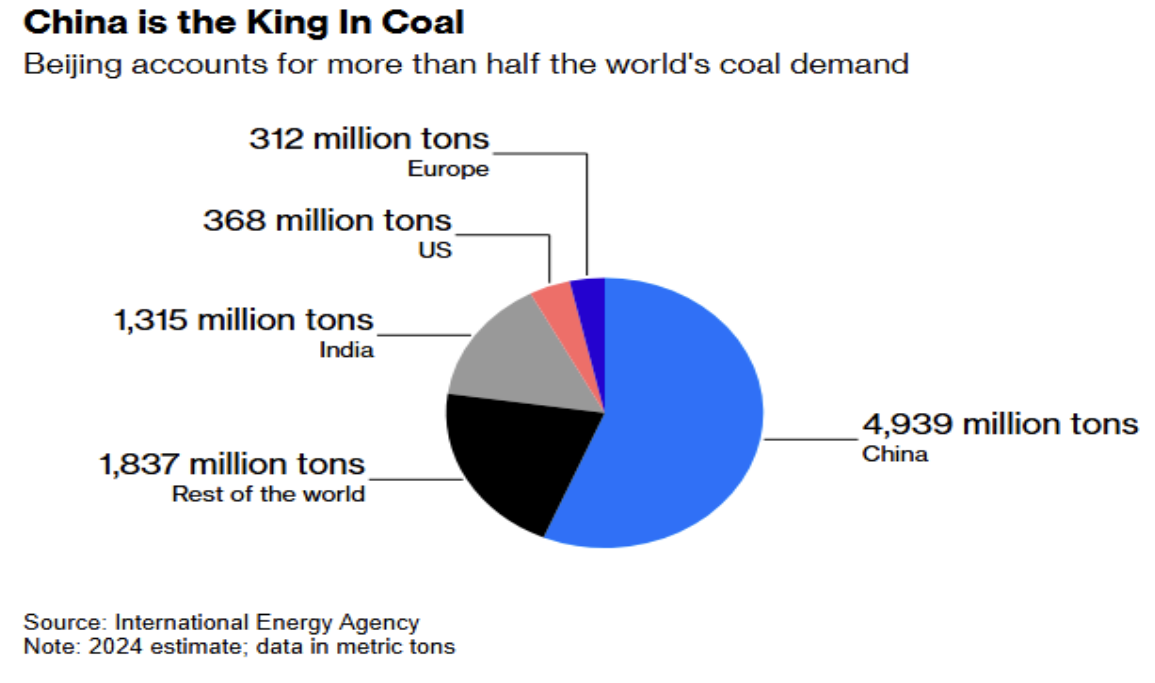
Since 2005, carbon dioxide emissions in the United States have declined by over 20%, primarily due to innovation and a shift from coal to natural gas in the power generation sector. That compares to China, whose carbon dioxide emissions have grown 85% since 2005 and is still building an average of two large coal-fired plants a week. Environmentalists, however, prefer to highlight China’s increased solar and wind capacity — inefficient technologies that produce a fraction of the energy that coal plants are capable of producing.
Zeldin’s proposed rule to rescind the endangerment finding must go through a public comment period that ends September 21, and the rule is likely to face lawsuits challenging the change. Zeldin is requesting people on both sides of the issue to submit comments.
Analysis
Supporters of rescinding the 2009 Endangerment Finding argue that the move represents a necessary course correction to restore regulatory balance, protect consumer freedom, and prevent economic harm. The Endangerment Finding has served as the legal foundation for sweeping and costly federal climate regulations, including mandates that restrict the types of vehicles Americans can buy and limit the technologies industries can use. These mandates have imposed significant burdens on key sectors such as transportation, energy, and manufacturing — costs that ultimately get passed on to families and businesses. Eliminating these regulatory barriers is expected to save Americans $54 billion annually, unlock over $1 trillion in long-term economic value, and boost GDP by as much as $440 billion each year. Importantly, this move does not abandon environmental progress; U.S. emissions have already fallen over 20% since 2005, largely thanks to market-driven innovation — not federal mandates. By removing legally questionable restrictions, the EPA’s proposed rule would shift the focus from punitive regulation to practical, innovation-led solutions that align environmental goals with economic realities.
*This article was adapted from content originally published by the Institute for Energy Research.
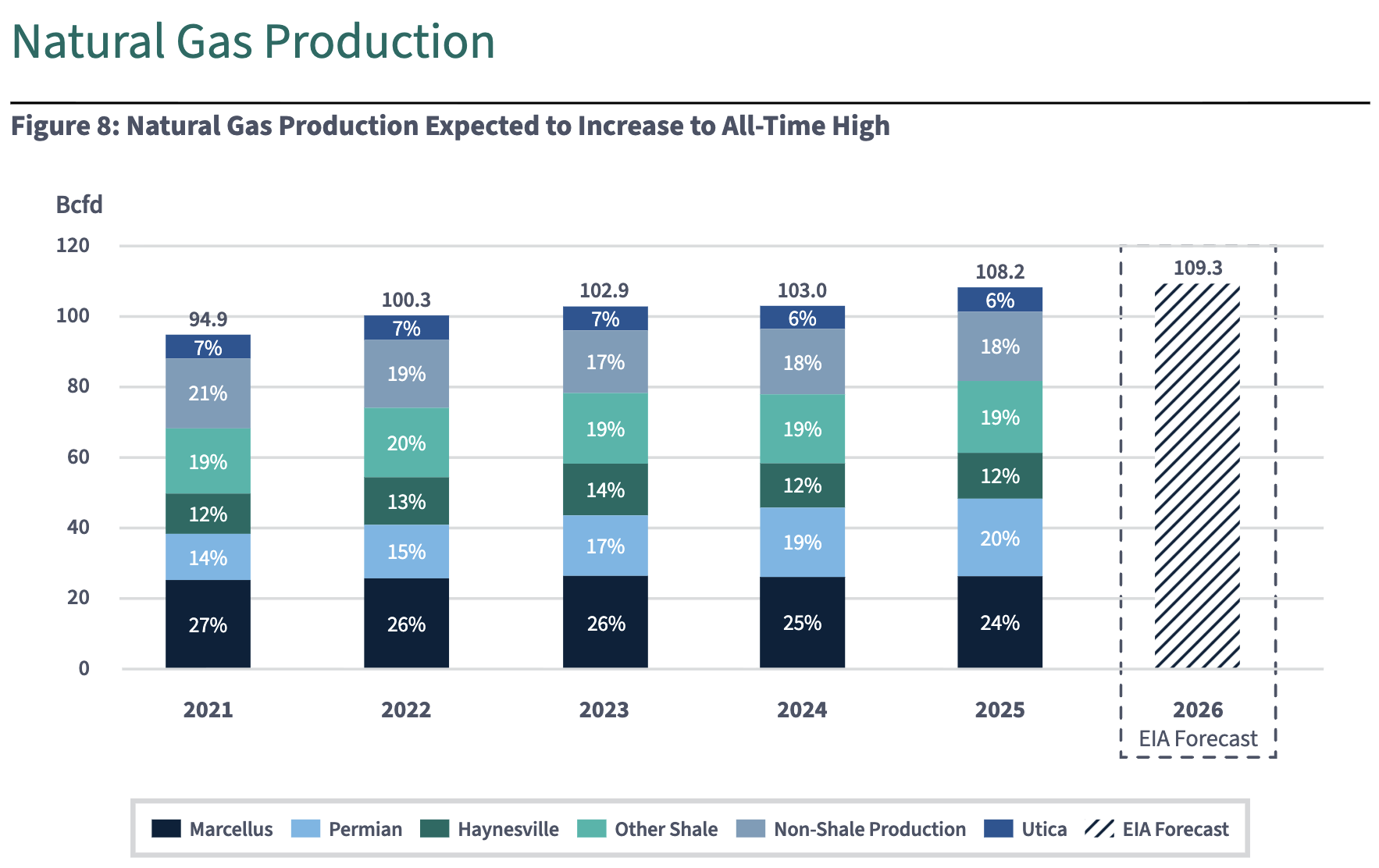
On this episode of The Unregulated Podcast Tom Pyle and Mike McKenna discuss what Congress is talking about while on break, the latest stories out of the People’s Republic of California, and forecasts for American energy production.
Links:
Stay Connected
The Trump administration is exempting over 100 chemical manufacturing plants, oil refineries, coal plants, medical device sterilizers, and other companies from Clean Air Act rules set by the Biden administration, recognizing that “overly restrictive environmental regulations undermine America’s energy reliability, economic vitality, and national security.” The Trump administration issued four proclamations exempting the facilities from one of four rules for two years. The plan is that by the time the two-year exemptions expire, the rules in question may be removed by the Environmental Protection Agency (EPA). According to the White House, “The exemptions ensure that these facilities within these critical industries can continue to operate uninterrupted to support national security without incurring substantial costs to comply with, in some cases, unattainable compliance requirements.” Even the Biden administration had noted the disruption the rules would cause when it previously said it would consider exempting facilities from a rule to prevent disruptions to supply chains for medical devices.
Due to one of the proclamations, more than 50 chemical manufacturers and oil refineries are exempt from requirements to reduce emissions of certain chemicals, including ethylene oxide and chloroprene. Eight producers of taconite iron ore, used in making steel, are exempt from requirements to reduce mercury emissions by about 33%. These plants are needed in the production of semiconductors and energy. Six coal plants are also exempt from the more stringent restrictions on emissions of mercury, nickel, arsenic, and lead set by the Biden administration, joining 66 other coal plants previously exempted.
On May 7, 2024, Biden’s EPA published a final rule, titled National Emissions Standards for Hazardous Air Pollutants: Coal- and Oil-Fired Electric Utility Steam Generating Units Review of the Residual Risk and Technology Review, which amended the preexisting Mercury and Air Toxics Standards rule set by the Obama administration to make it more stringent. The Biden rule’s compliance date is July 8, 2027, three years after the rule’s effective date of July 8, 2024. Because the rule requires compliance with standards based on emissions-control technologies that do not yet exist in a commercially viable form, President Trump issued the proclamation for coal plants that allows the exemptions.
In March, the EPA set up a portal allowing companies to request exemptions from nine Clean Air Act rules. Among those exempted are taconite iron ore plants in Minnesota owned by the United States Steel Corp. and six facilities owned by Cleveland-Cliffs Inc. in Minnesota and Michigan. Chemical makers, including Dow Inc. and BASF SE, and refiners such as Phillips 66 and Citgo Petroleum Corp., also received waivers from EPA regulations requiring emissions controls for certain facilities, allowing them to avoid massive capital investments for compliance or shutting down.
With the latest announcement, coal-fired power plants in Ohio, Illinois, and Colorado were exempted from Biden’s climate mandates limiting emissions of mercury. Other coal plants that received exemptions earlier are Montana’s Colstrip Generating Station, North Dakota’s Coal Creek Station, and the Oak Grove plant in Texas. The exemptions also apply to four plants operated by the Tennessee Valley Authority, the nation’s largest public utility. According to the EPA, the presidential exemptions “will bolster coal-fired electricity generation, ensuring that our nation’s grid is reliable, that electricity is affordable for the American people, and that EPA is helping to promote our nation’s energy security.”
President Trump issued executive orders to allow some older coal-fired power plants set for retirement to keep operating due to rising U.S. electricity demand from growth in data centers, artificial intelligence, and electric vehicles. Trump also directed his agencies to identify coal resources and prioritize coal leasing on federal lands, and to lift barriers to coal mining.
Analysis
Ideally, environmental regulations should not be subject to ad hoc exemptions on a firm-by-firm basis, as this undermines the rule of law and creates uncertainty for both industry and the public. Equal treatment under the law requires that all companies operate under the same set of rules, not temporary carveouts granted through executive discretion. Given that the current regulations are unworkable and reliant on nonexistent technologies, the EPA should move swiftly to revoke or revise them through proper administrative channels. Furthermore, Congress should act to codify a more balanced and technologically feasible standard, ensuring clarity, consistency, and long-term legal stability for energy producers and manufacturers alike.
*This article was adapted from content originally published by the Institute for Energy Research.
WASHINGTON DC (7/29/25) – Today, the Environmental Protection Agency (EPA) issued its proposed rulemaking to withdraw the 2009 endangerment finding for greenhouse gases. Concurrently, the Department of Energy released a separate report on the state of climate science.
American Energy Alliance President Tom Pyle released the following statement:
“For a decade and a half, the EPA has used the ‘endangerment finding’ as authority to reject permits, shut down projects, and deny Americans access to reliable, affordable energy and transportation choice. It has reshaped investment and infrastructure to our country’s detriment and has been used as a vehicle to push a political agenda.
“The longstanding legal and scientific issues with the endangerment finding are finally going to be addressed under the leadership of President Donald Trump, EPA Administrator Lee Zeldin, and Secretary of Energy Chris Wright. Congress never granted EPA authority to regulate greenhouse gases under the Clean Air Act–legislation written specifically for harmful pollutants, not global emissions–and yet the endangerment finding has been used as a justification to repeatedly do exactly that.”
AEA Experts Available For Interview On This Topic:
Additional Background Resources From AEA:
For media inquiries please contact:
[email protected]
WASHINGTON DC (7/22/25) – The American Energy Alliance (AEA) is proud to announce the launch of our newly refreshed website. This redesigned site offers improved navigation and an enhanced user experience, making it easier to access tools and resources to empower American energy consumers and policymakers.
American Energy Alliance President Tom Pyle released the following statement:
“Our new web design is all about making it easier for visitors to find the information that they need on key energy policy issues. We’ve streamlined the design and made navigating information easier to help both the private citizens and policymakers who look to us for our analyses and research. By improving the way we deliver content, we are working in support of our mission of advancing policy in favor of free market solutions and affordable, reliable energy for all.”
Key features of the new website include:
To explore the new site and learn more about the American Energy Alliance’s mission, visit www.americanenergyalliance.org.
AEA Experts Available For Interview On This Topic:
Additional Resources:
For media inquiries, please contact:
[email protected]