Democrats Attack Domestic Energy Producers Through “Build Back Better”

On November 19, the House of Representatives passed a $2 trillion budget bill with a long list of increases in federal royalties and fees, plus new fees, new taxes, and barriers to leasing in the Arctic National Wildlife Refuge, the Pacific, Atlantic, and eastern Gulf of Mexico. It passed on a party-line vote of 220-213 and was sent to the Senate, where changes are expected. It contains a long list of higher costs for oil and gas companies, especially those operating on federal lands. The arbitrary new fees would add millions of dollars in operating costs, pricing out U.S. production. This bill taxes American energy, restricts access to resources owned by Americans and advances ‘import-more-oil’ strategy that the Biden administration has been promoting—all of which will cost Americans more to heat their homes with natural gas and fill their tanks with gasoline.

On the other hand, the bill contains some $300 billion in spending for renewable energy—by far the largest component of the climate spending in the package. It would expand tax credits for renewable power, electric vehicles, biofuels and energy efficiency. The credits could accelerate investments in both utility-scale and residential renewable energy as well as electricity transmission, power storage and “clean-energy” manufacturing. Thus, the bill uses taxpayer funds to promote “green” causes that cannot efficiently and affordably supply energy to the American public.

Source: House Rules Committee; Novogradac

Build Back Better Act Attacks the Oil and Gas Industry

The bill ups the royalty rate for all new onshore oil and gas leases on federal lands to 18.75 percent, up from the 12.5 percent minimum currently. For offshore, the minimum would be 14 percent, and the policy option of royalty relief for economic reasons would be terminated.

Royalties for natural gas would cover all natural gas, including gas vented, flared, or leaked from onshore and offshore operations in the upstream, with an exception only for 48 hours of emissions during an emergency.

Onshore minimum bids and rental rates would increase, and the primary term for onshore leases in the 48 contiguous states would be limited to 5 years. An “expression of interest fee” of $15 to $50 per acre would be added to Department of Interior costs.

A new annual “conservation of resources fee” would be set at $4 per acre onshore and offshore, and a new annual “speculative leasing fee” would be set at $6 per acre for new nonproducing leases. No noncompetitive leasing would be permitted. Bonding to cover potential costs would need to be updated by Interior.

Offshore inspection fees are specified, while onshore inspection fees would be required from the Department of Interior. A severance fee would be collected by Interior at a rate of $0.50 per barrel of oil equivalent produced.

An annual fee would be levied for “idled” wells—idled for at least 2 years—and  for which there is no anticipated beneficial future use.

An annual fee would be imposed on offshore pipeline owners: $1,000 per mile in waters less than 500 feet deep and $10,000 per mile in deeper waters.

The leasing program for the coastal plain of the Arctic National Wildlife Refuge would be repealed, and all payments made for leases would be returned to lessees. New exploration and production would be barred in the Pacific, Atlantic and eastern Gulf of Mexico—a codification of what has been the status quo for many years.

A new methane “waste emissions charge” would apply to all onshore and offshore oil and gas exploration and production work, as well as oil and gas gathering lines, upstream and midstream gas pipeline transmission, gas pipeline compression, onshore gas processing, underground storage, liquefied natural gas storage, and LNG import and export equipment. In other words, it will not just apply to operations on federal lands. The fee would be $900 per ton for methane emissions in 2023, $1,200 in 2024, and $1,500 thereafter. For production sites, the new fee would apply to emissions that exceed two-tenths of 1 percent of the natural gas sent to sale, though an alternative calculation also is provided. For natural gas transmission, upstream from retail utility operations, the fee would apply to emissions that exceed 0.11 percent of the gas sent to sale.

At the COP26 meeting in Scotland, the United States announced it will participate in the Global Methane Pledge to cut methane emissions 30 percent by 2030.The methane fee in the Build Back Better bill is part of Biden’s commitment to reach that goal. But, two of the world’s biggest methane emitters — China and Russia — refused to sign the Global Methane Pledge. Here again Biden wants to use Americans as examples without concern about what the financial outcome would be to American energy expenses.

Renewable Energy Benefits

The proposed bill includes a variety of renewable energy tax incentives. It would structure various credits as tiered incentives, providing either a base rate or a bonus rate of five times the base amount for projects that meet certain prevailing wage and apprenticeship requirements. An additional increased credit amount could be claimed in certain cases if projects comply with domestic content requirements, such as ensuring that any steel, iron, or manufactured product was produced in the United States.

The production tax credit (PTC) for energy facilities that produce electricity from renewable energy sources would be extended through 2026 and increased for facilities in energy communities where a coal mine or a coal-fired electric generating unit has been shut down. The PTC for solar facilities would also be reinstated through 2026. The investment tax credit would be extended through 2026 for most property and increased for projects in energy communities and for solar and wind facilities that serve low-income communities. The PTC would consist of a base credit rate of 0.5 cents per kilowatt hour and bonus credit rate of 2.5 cents per kilowatt hour through 2026.

The renewable energy investment tax credit (ITC) includes projects that begin construction before the end of 2026 and then would phase down over two years. The ITC would be expanded to include energy storage technology and linear generators. These technologies would be eligible for a 6 percent base credit rate or a 30 percent bonus credit rate. It would provide an additional 20 percent credit for the ITC if the solar facility was placed in service in connection with a qualifying low-income residential building/low-income benefit project, or an additional 10 percent credit if the facility is located in a low-income community.

The production tax credit and investment tax credit would be available after 2026 and phased out beginning in 2031 or when U.S. emissions targets are achieved.

Other provisions include:

  • A new investment credit for electric transmission property that would apply to facilities placed in service through 2031.
  • A new zero-emission nuclear power production credit for facilities that produce electricity, available through 2027.
  • A new credit for producing clean hydrogen, based on lifecycle greenhouse gas emission rates, through 2028.
  • An investment tax credit for advanced manufacturing facilities that start construction before 2026 and a production tax credit for eligible components that would begin to phase down in 2027.
  • A credit for the domestic production of clean fuels that would be based on their lifecycle carbon emissions, which would also be phased out beginning in 2031 or when emissions targets are achieved.

Electric Vehicle Tax Credits

Under the Build Back Better bill a $7,500 consumer tax credit would be made refundable and expanded by $4,500 for cars assembled domestically by plants represented by unions. An additional $500 bonus would be added for vehicles that use batteries made in the United States for a total of $12,500. The legislation also would create a new $4,000 tax credit for the purchase of used electric vehicles. The new tax-credit package also eliminates the 200,000-vehicle cap, making GM and Tesla vehicles eligible again.

More expensive vehicles would not qualify for the tax credit under the current proposal. Sedans and smaller cars would only be eligible if they cost less than $55,000. For sport-utility vehicles and trucks, the sticker price would have to be under $80,000 to qualify. The proposed tax credit includes an income cap. Individuals have to make under $250,000 annually to be eligible for the credit. For households, the cap is $375,000 for a single-income family and $500,000 for a dual-income family.

The $2 trillion tax and spending bill, passed by the House, would significantly expand the nation’s demand for lithium batteries and provide opportunities for Chinese electric vehicle supply chain leaders including the Contemporary Amperex Technology Company (CATL). Based in the southeastern province of Fujian, CATL is the world’s largest manufacturer of power batteries and materials. Auto giants Daimler, BMW, and BAIC Motor Corp are customers.

Conclusion

Despite high gasoline prices stressing the U.S. consumer and home heating prices expected to soar this winter, the House Democrats are hiking fees and increasing red tape on the U.S. oil industry. The House Build Back Better bill provides oil and gas provisions that are punitive measures, including arbitrary new fees that would add millions of dollars in annual operating costs, pricing out U.S. production on federal lands and waters and taxing methane emissions from all production, even on private lands. These provisions are a gift to higher emitting producers like Russia and China that wield their energy resources as a geopolitical tool and would fundamentally weaken one of America’s most important economic, energy, emissions and national security assets. At the same time, it would give renewable technologies subsidies that they have been receiving for decades to replace efficient and affordable energy from coal, oil, natural gas and nuclear power. The result of the Build Back Better Bill is not better energy or a better life style for Americans. Rather, it is a costly measure, increasing transportation fuel, heating, and electricity bills for Americans.


*This article was adapted from content originally published by the Institute for Energy Research.

Biden’s Black Friday Bombshell: Interior to Pursue Policies That Will Make Gasoline Even More Expensive


President Biden seeks further restrictions of oil and gas development on federal lands, substantially higher royalty fees.


WASHINGTON DC (November 23, 2021) – The American Energy Alliance (AEA), the country’s premier pro-consumer, pro-taxpayer, and free-market energy organization, strongly condemns President Biden’s Black Friday release of a report on the federal oil and gas leasing program calling for further restrictions on federal lands for oil and gas development.

AEA President Thomas Pyle made the following statement in response to the release of the report:

“Just days after taking to the podium to feign his concern for higher gasoline prices, President Biden’s Interior Department released a Black Friday bombshell report calling for even less drilling on federal lands and draconian increases in royalty payments. If enacted, theses policies would further limit our ability to produce oil and gas resources on federal lands and waters and lead to even greater pain at the pump.

“While Americans are enjoying their Thanksgiving holiday, despite the fact that they are paying more because of Biden’s anti-energy and inflationary policies, the Administration is attempting to bury their latest assault on the oil and gas industry with a Black Friday announcement. It’s just another example of their open disregard for the struggles of hard working American families. 

“President Biden’s actions speak louder than his words. He wants American families to think he cares about high gasoline prices, yet all of his actions since day one of his presidency make it abundantly clear he wants them to soar even higher.”


Additional Resources:


For media inquiries please contact: 

PRESS@ENERGYDC.ORG

The Unregulated Podcast #59: Strategic Polling Reserve

On this episode of The Unregulated Podcast Tom Pyle and Mike McKenna discuss the Biden administration’s decision to release resources from the U.S. Strategic Petroleum Reserve.

Biden’s SPR Release a Cynical CYA Exercise in Spin


President Biden’s Thanksgiving Day ploy to address rising gasoline prices ignores his ten months of anti-energy policy.


WASHINGTON DC (November 23, 2021) – The American Energy Alliance (AEA), the country’s premier pro-consumer, pro-taxpayer, and free-market energy organization, dismissed President Joe Biden’s announced release of oil from the Strategic Petroleum Reserve (SPR) as a cynical and feckless exercise timed for Thanksgiving and aimed at stemming his plummeting poll numbers. A release from the SPR will do nothing to solve the root cause of American’s increased gasoline prices that he and his administration have largely contributed to since his first day in office.

AEA President Thomas Pyle made the following statement in response to the announcement:

“President Biden’s Thanksgiving feast of 50 million barrels from the Strategic Petroleum Reserve is a cynical exercise directed more to influence his falling poll numbers than actually helping bring down gas prices for hard-pressed American families. From his first day in office, President Biden has championed policies designed specifically to curtail the production and distribution of our oil resources and increase the cost of gasoline. Perhaps his release of our strategic national reserve is a sign that his policies are working too well.

“On day one, President Biden stopped thousands of Americans from working on the Keystone XL pipeline from Canada, which would have delivered long-term supplies of oil to our refineries in the Gulf of Mexico. Biden also suspended leasing on 2.46 billion acres of federal lands and waters – illegally, as it turns out – and only held the first lease sale last week under a judge’s orders.

“President Biden has presided over an energy policy that has made Russia our number two importer of oil. The Administration shut down congressionally mandated lease sales in ANWR and the National Petroleum Reserve Alaska, while Russia now supplies twice as much oil as we get from Alaska. Now, when Americans are feeling the impact of gas prices at a seven-year high, he wants more oil on the market.

“Biden’s plan ignores the fact that market analysts have already factored the release into the price of oil, meaning the savings at the pump will barely register. Meanwhile, Bank of America predicts that oil prices will reach $120 per barrel next year, when those million barrels are expected to be returned to the SPR. That’s hardly a good deal for our refiners.

“After ten months of the most extreme anti-oil and natural gas agenda ever from a sitting president, Biden’s SPR release is like raiding the pantry while starving the farmer. No thanks, Joe.”


Additional Resources:


For media inquiries please contact: 

PRESS@ENERGYDC.ORG

AEA Calls for FTC Investigation of Anti-Consumer Behavior by President Biden and His Administration


Hard-working Americans should not have to pay more for gasoline
when we’re the world’s largest oil producer.


WASHINGTON DC (November 22, 2021) – The American Energy Alliance, the country’s premier pro-consumer, pro-taxpayer, and free-market energy organization, is calling on the chairman of the Federal Trade Commission (FTC) to investigate intentional and strategic steps made by the Biden administration to artificially and unnecessarily raise the price of energy on American consumers.

AEA President Thomas Pyle issued the following statement along with this letter to the FTC:

“By asking the FTC to investigate oil companies for price gouging, President Biden has joined a long and unremarkable list of politicians who promote policies that increase the cost of energy and then seek to cast blame elsewhere. The American people aren’t buying it.

“Joe Biden has been wrong about oil and gas for decades. He was one of only five Senators who voted against the Trans-Alaska pipeline in 1973. As President, nearly fifty years later, he killed the Keystone pipeline with the stroke of a pen. From day one of his presidency, Biden has waged war against American energy producers, pursuing policies that curtail the production of oil and natural gas and punish them through higher taxes and crippling regulations.

“With his poll numbers tanking, and Americans paying punishing prices at the pump, Biden suddenly pretends to care about gasoline prices.

“The FTC has issued nearly fifty reports on oil and gasoline pricing. In no instance did the FTC find the type of wrongdoing President Biden is alleging. The FTC should investigate President Biden instead. They will no doubt determine that his anti-consumer behavior is contributing to the high price of gasoline.”


For media inquiries please contact:
PRESS@ENERGYDC.ORG

The Unregulated Podcast #58: Comrade Komarovsky Secretary Giggles

On this episode of The Unregulated Podcast Tom Pyle and Mike McKenna discuss Biden’s attempt to nominate an outright Marxist to regulate America’s banking sector and the administration’s tone-deaf response to rising gas prices.

Links:

Key Vote NO on amendment H.R. 5376

The American Energy Alliance reminds all members of our previously issued key vote alert opposing H.R. 5376, the reconciliation spending package.

The reconciliation package is packed with subsidies for special interests and distortions to energy markets. Energy sources we are assured are already cheap are generously subsidized. Reliable energy sources, like those that heat American homes, are taxed. Domestic sources of energy are restricted or banned. The combined effect of the energy provisions in this legislation leads to only one result: higher energy bills for all Americans. At a time of rocketing inflation, including in energy prices, the last thing hardworking Americans need is the government making these crucial inputs of the economy more expensive through misguided central planning, mandates and subsidies.

The AEA urges all members to support free markets and affordable energy by voting NO on H.R. 5376. AEA will include this vote in its American Energy Scorecard.

Hey, Joe, Look in the Mirror!

The White House continues to try its best to distract Americans from the impact of their harmful energy policies. The White House understands that the public is unhappy with the price of gasoline and they are trying everything they can think of to blame somebody, anybody, but themselves. 

We have chronicled Secretary Granholm’s desire to blame OPEC for high oil prices. Then a few days ago, she noted that the real problem is Wall Street. The White House has also been blaming oil companies for some kind of anti-competitive behavior with the President himself asking the Federal Trade Commission to investigate. This is cynical, dishonest, and wrong. It is “passing the buck.” 

As the administration knows, allegations of anti-competitive behavior and market manipulation is nothing new in oil and gas markets. In fact, over the past 20 years, the FTC has issued nearly 50 reports on the subject. If there were problems, the FTC would have found it a long time ago.

But let’s consider the specific issue President Biden is concerned about. He writes: 

“However, prices at the pump have continued to rise, even as refined fuel costs go down and industry profits go up. Usually, prices at the pump correspond to movements in the price of unfinished gasoline, which is the main ingredient in the gas people buy at the gas station. But in the last month, the price of unfinished gasoline is down more than 5 percent while gas prices at the pump are up 3 percent in the same period.” 

This is exceedingly strange to be concerned over small price movements over the course of one month and claiming it is evidence of anti-consumer behavior by oil and gas companies. No one is complaining about an 8 percent price swing. People are complaining because the price of gasoline is up 43 percent since Inauguration Day ($3.41 a gallon today versus $2.39 a gallon on Inauguration Day). 

The President should note that while the price at the pump is up 43 percent, the price of crude oil—the stuff that get refined into unfinished gasoline—is up 48 percent since Inauguration Day (West Texas Intermediate was $53.98 on Inauguration Day and is now $79.87). If the price of crude oil and the price at the pump are not in lockstep at all times, the prices of crude, unfinished gasoline, and the price at the pump will not always be in lockstep.  

The reality is that prices of crude, unfinished gasoline, and the price at the pump are coupled, but not perfectly. For example, ethanol and other blending components are added to unfinished gasoline, along with transportation and additional labor costs to get to the price at the pump. These prices bounce around from week to week and month to month. There is no scandal that the price of oil has outpaced the price at the pump since January. Otherwise, President Biden would have to ask for an FTC investigation for why gasoline marketers aren’t charging people more at the pump. 

The Biden administration wants higher prices at the pump. They keep taking actions that will reduce domestic oil production or increase the cost of oil imports from Canada and then they complain about the price at the pump. It’s either dishonest or they are really ignorant of basic economic principles.

On the same day that President Biden sent his letter to the FTC, E&E News ran an article on the Department of Interior’s mission to make it harder to produce oil and gas on government lands. E&E News explains:  

“The Interior Department’s second in command this week pledged the Biden administration is orchestrating a paradigm shift for the federal oil program, explaining in unusually candid detail possible components of the strategy to restrain fossil fuel development on public lands.

‘We are here to fundamentally reform the Interior Department’s oil and gas program,’ Deputy Secretary Tommy Beaudreau said during an interview with the Energy Policy Institute at the University of Chicago.

‘Beaudreau noted several specific policy changes that are being considered and spoke favorably of raising royalty rates, as well as launching new rules around valuation of fossil fuels to limit how royalties are whittled down through exclusions and write-offs.’

‘…I believe that going through that process is the best way to, at the end of the day, make sure the changes last and get us on a path to decarbonizing public lands.’”

These remarks demonstrate that the Biden administration is taking actions that will make it more expensive to produce oil and gas on public lands. Furthermore, they obviously do not want to follow the law. 

There is no statute that tells the Department of Interior to work towards “decarbonizing public lands.” In fact, the Federal Land Policy and Management Act of 1976, the Bureau of Land Management’s organic act does not contain the word “carbon.” Instead, it defines the Bureau of Land Management’s mission as mission as one of “multiple use and sustained yield.” 

“Multiple use” explicitly contemplates oil and gas development. There are a number of place the law explicitly discusses oil and gas development. In other words, the Biden administration is trying to ignore oil and gas development, things they have explicitly been instructed by Congress to do, in favor of decarbonization, which they have no statutory authority to do.  If President Biden is really looking for “anti-consumer behavior” that is driving up the cost of gasoline as his letter to the FTC asserts, he does not need to look far. That anti-consumer behavior is coming from the White House and its federal agencies and their fight against domestic production of oil and gas. Many people understand that that’s why Biden “I Did That!” stickers are popular on gasoline pumps. 

Biden Renews Obama’s War On Coal

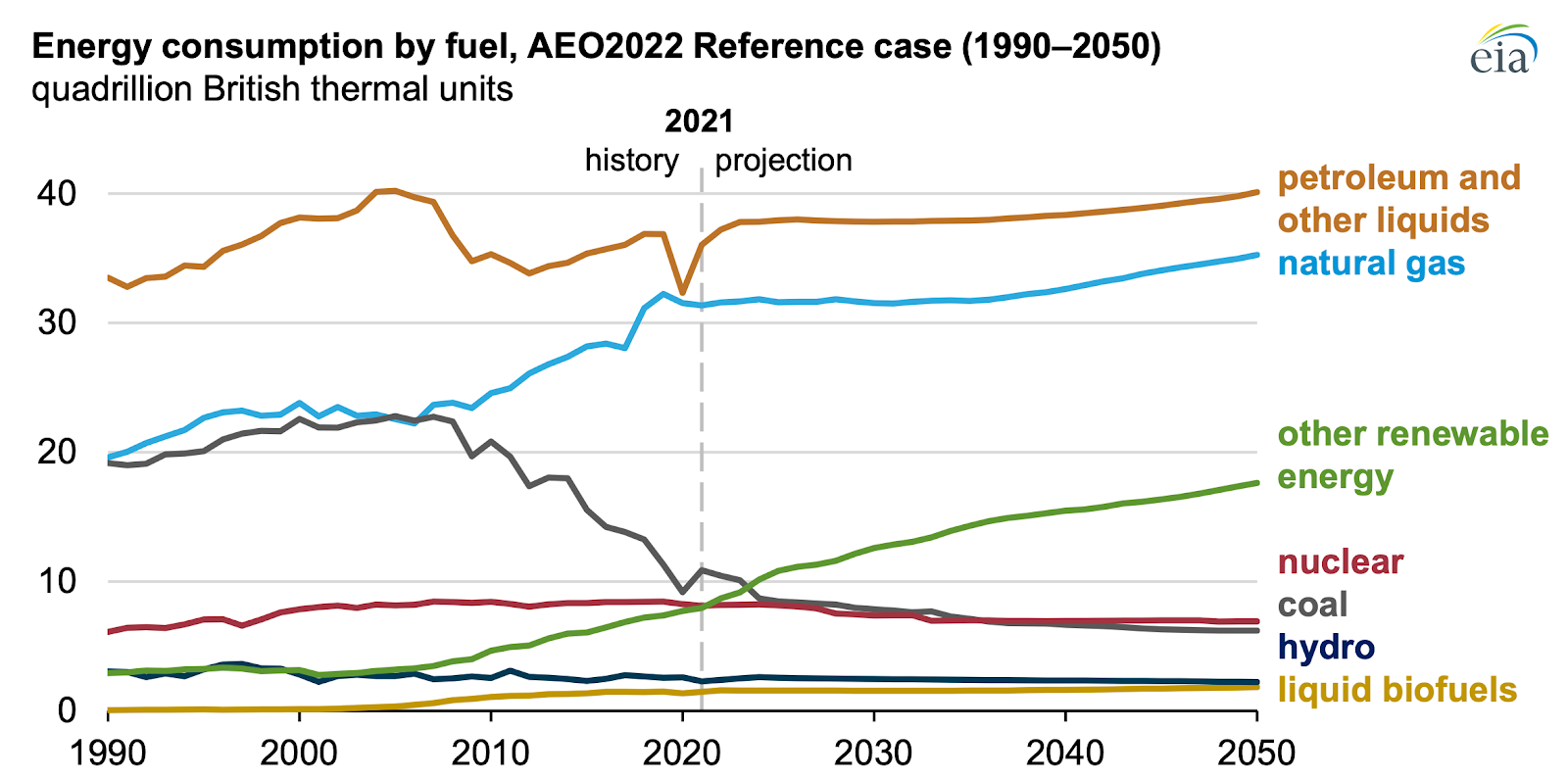
The draft agreement from COP26 in Glasgow, Scotland calls on parties to accelerate phasing out “unabated” coal consumption and John Kerry, COP26 participant and U.S. climate envoy, claims the United States won’t have coal by 2030. In an interview, Kerry stated, “We will not have coal plants.”  Yet, coal generation in the United States is expected to increase its share of electric generation to 23 percent this year—up from 19 percent last year—and regaining its 2019 share. This will be the first increase in coal generation since 2014. Coal is regaining market share from higher-priced natural gas, whose share is expected to drop to 36 percent in 2021, down from 39 percent last year.

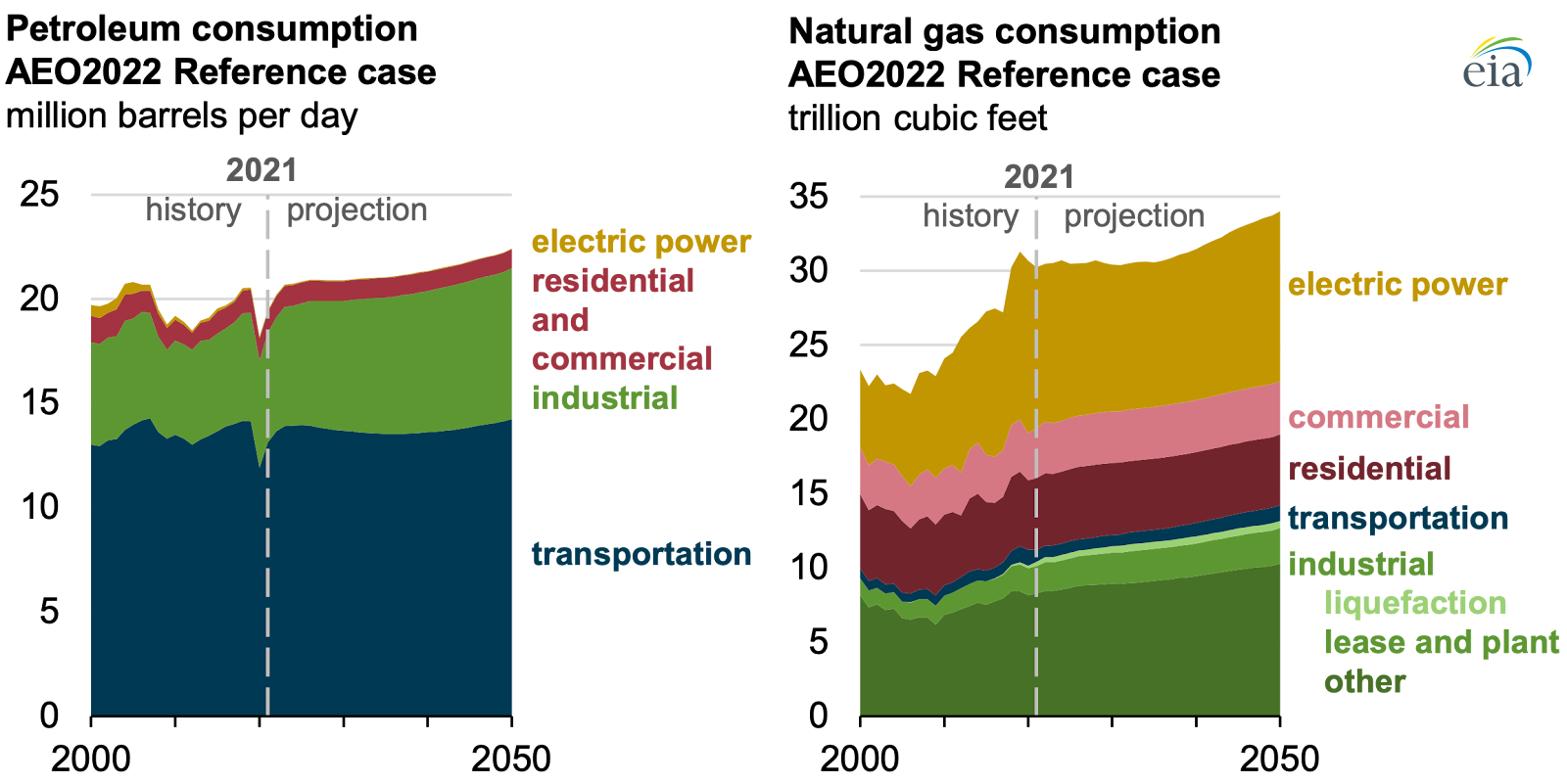
The Biden administration’s war on the oil and gas industry has escalated natural gas prices to over $6 per thousand cubic feet at the city gate and paved the way for coal’s entrance back into the utility market. In fact, coal’s increased generation through July of this year compared to the same period last year is 4 times larger than the combined increase in wind and solar generation for the same period. Unlike in Europe that is seeing soaring energy prices, U.S. electricity generators have turned to coal because they have the coal power plant capacity and because it is cheaper for electricity rate payers due to the abundance of coal resources in the United States.

John Kerry’s prediction that the United States will have no coal plants in 2030 is almost laughable when the United States has the largest coal reserves in the world—23 percent compared to Russia’s 15 percent and Australia’s 14 percent. China with 13 percent of the world’s coal reserves generates over 60 percent of its electricity from coal and India with 10 percent of the world’s coal reserves generates over 75 percent of its electricity from coal. Even Japan gets over 30 percent of its electricity generation from coal and has no plans to phase it out.

Globally, coal is still the main source of electricity generation at 37 percent of the world’s total generation. China added 38.4 gigawatts of new coal-fired power capacity in 2020, more than three times the amount built elsewhere around the world, bringing its total coal-fired capacity to well over 1,000 gigawatts—about the total generating capacity in the United States from all sources. In the first half of 2021, Chinese provincial governments approved 24 domestic coal plants and Chinese localities have around 104 gigawatts in top-priority coal-power capacity planned—more than what’s currently installed in Japan and Russia combined.

Coal is not just used for electricity generation, it is also the backbone of steel production. China produces 57 percent of the world’s steel while the United States, United Kingdom and the European Union produce 13 percent. China relies on energy-intensive industries like steel, cement, and chemicals to power its growth and coal powers around 56 percent of China’s industry-heavy economy. And, for the countries transitioning to a “green” economy, coal-produced electricity and steel make it integral to the construction of windmills and solar panels. It is just that the carbon dioxide emissions that result from the production of those solar panels and windmills are emitted in China, not in the countries spouting the need for a non-carbon future. What hypocrisy!

China’s Dominance of Solar Panel Manufacturing

Chinese factories supply more than three-quarters of the world’s polysilicon, an essential component in most solar panels. Polysilicon factories refine silicon metal using a process that consumes large amounts of electricity, making access to cheap power a cost advantage. Chinese authorities built an array of coal-burning power plants in sparsely populated areas such as Xinjiang and Inner Mongolia to support polysilicon manufacturers and other energy-hungry industries where the cost of generation is half that of the rest of the nation. These factories also use Muslim Uyghurs for ‘slave’ labor.

China is also home to most of the companies that slice polysilicon into wafers, package the wafers into cells and assemble the cells into panels. U.S. tariffs on Chinese solar panels and cells have pushed Chinese companies to set up factories for these parts in other countries but Chinese controlled companies dominate the world’s solar panel manufacturing.

The solar industry’s reliance on Chinese coal will create a huge increase in carbon dioxide emissions in the future as manufacturers rapidly scale up production of solar panels to meet demand for a carbon free future being forced upon consumers in Western nations. That would make the solar industry one of the world’s most prolific polluters, undermining some of the emissions reductions achieved from widespread solar adoption. Because of the use of cheap coal, producing a solar panel in China creates around twice as much carbon dioxide as making it in Europe where other forms of energy are available, but at a higher cost. For example, in Germany the number of jobs in solar PV panel production and installation fell from a record 133,000 in 2011 to under 28,000 seven years later as many companies were forced out of business thanks to cheaper competitors from China scooping up most of the market.

Conclusion

Coal is still king for electricity generation world-wide and for steel production. While the United States under the Biden administration is trying to phase coal out, the Administration’s policies on oil and gas is bringing coal back for generation in order to keep electric prices from skyrocketing for U.S. consumers. The United States has the most coal reserves of any country in the world and can power the country with low-cost, reliable and abundant coal if it were allowed to as it is in China and India, producing well over 60 percent of their power. While China’s economy grows, the U.S. economy stagnates. The United States should follow China’s lead, rather than Biden’s hypocrisy.


*This article was adapted from content originally published by the Institute for Energy Research.

AEA Congratulates the other Joe on Infrastructure “Win”


The trillion-dollar boondoggle will do nothing to fix the actual problems facing America today and those which voters are most concerned about:  the supply chain crisis and rocketing inflation.


WASHINGTON DC (November 16, 2021) – The American Energy Alliance (AEA), the country’s premier pro-consumer, pro-taxpayer, and free-market energy organization, opposed the $1 trillion Infrastructure Investment and Jobs Act, which President Biden signed into law yesterday. AEA President Thomas Pyle issued the following statement in response to its passage:

“Congratulations to Joe on the passage of the trillion-dollar spending bill. Not President Joe Biden, but the other Joe from West Virginia. The bill, like Senator Manchin himself, is an old-timey brand of Democratic party legislating:  spend a lot of money across preferred special interests and constituencies. Meanwhile, American families will get very little in return. 

“Senator Manchin doesn’t deserve all the credit, however. I would be remiss to ignore the contribution of Senator Krysten Sinema, the Arizona Democrat who worked hard to attract GOP Senate support for the bloated bill. And finally, the baker’s dozen House Republicans who provided Speaker Pelosi the necessary votes to get the bill over the finish line.

“Spending with no return is the theme of this bill. Tens of billions for rail, which few Americans choose, let alone use. It seems Congress insists on repeating and expanding the fantastically expensive bullet train boondoggle in California. Expanding mass transit in our largest cities, which forces people together, in an era of pandemic and physical distancing is mindboggling. Even the spending on actual highways, a mere 10% or so of the total bill, is likely to net only a limited gain.” 

“This infrastructure bill does nothing to fix the actual problems facing America today and those which voters are most concerned about: the supply chain crisis and rocketing inflation. That this wasteful and unnecessary legislation has consumed the attention of Congress for half the year is an indictment of the institution. We can only hope that wasted time and wasted money are the only consequences of this legislation.”


Additional resources:


For media inquiries please contact:
PRESS@ENERGYDC.ORG